
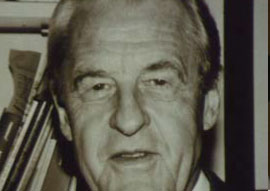
Rolf Rendtorff is Professor Emeritus of Old Testament Theology. From 1958 to 1963, he was Professor at the Kirchliche Hochschule Berlin; from 1963 to 1990, he was a professor at the University of Heidelberg, where he also served as Rector of the University (1970 to 1972). He has served as a visiting professor at the Hebrew University in Jerusalem, at the Divinity School of the University of Chicago, at the Pontifical Biblical Institute in Rome, and at the University of Pretoria in South Africa.
Since his first visit to Israel in 1963, he has committed himself to German-Israeli as well as Jewish-Christian relations. He was a cofounder of the German-Israel Society (1965) and served in different capacities in Jewish-Christian relations in Germany and in the framework of the World Council of Churches. He is the author of many books in Biblical studies as well as in Jewish-Christian relations. Some of them are translated into English, including Men of the Old Testament, God’s History, The Problem of the Process of Transmission in the Pentateuch, and Canon and Theology. He is coauthor of The Theology of the Churches and the Jewish People: Statements by the World Council of Churches and Its Member Churches. The first volume of his Theology of the Old Testament is forthcoming (in German, followed by an English translation).
Shabbat Shalom*: For a specialist of the Old Testament, it does not seem apparent or necessary—at least not initially—to enter into a dialogue with Judaism. Judaism is more or less restricted to historical study. How is it then that not only your own interest in Judaism was kindled, but that you actively became involved in dialogues between Christians and Jews?
Rendtorff: This is a rather curious question that is justified in our present historical setting. It should actually be quite obvious that someone who has dedicated his life to the study of the Hebrew Bible should also interest himself in the further development of Hebrew history and language. That, of course, is no answer to your question, since your question is of a biographical nature.
By the way, if I may add, this question would no longer be posed to a younger specialist of the Old Testament. Many, including German Old Testament specialists, were in Israel at the Hebrew University during their time of study. I have personally contributed to the sending of a few hundred German students who spent a year in Jerusalem. Today, we have a much larger number of people who have reconstructed a relationship to Judaism in this manner.
Shabbat Shalom: One might say that you have been a pioneer in this area. Weren’t you the first German professor who was given permission to lecture at the Hebrew University?
Rendtorff: I was handed an official invitation. At the time, my colleagues said to me, “To invite a German as a guest lecturer (after all, this was 1973) would be impossible if you didn’t speak Hebrew.” But to invite a German and say, “His lectures will be in Hebrew” was, on the other hand, a major attraction. That is the reason they could invite me. For me personally, everything began from the outside looking in. In 1959, I was in the Arabic countries as a result of a course I was attending at the German Palestinian Institute. That was the time when the eastern part of Jerusalem belonged to Jordan. I had lived for several weeks in a hotel in Jerusalem that was directly at the Jaffa Gate and was thus able to look over the artificial wall that had been erected into the Jewish section of Jerusalem. One was not allowed to enter this part of town, and so it remained a foreign world. I told myself then, “You must also see it from the other side.”
My own interest in Judaism corresponded to students’ growing interest in Israel. German-Israeli student organizations already existed in the early 1960s. And in 1963, I flew to Israel with a group of students from the denominational university in Berlin, where I taught at the time.
At first, my interests were of a scientific and archaeological nature, but later they took on a more political viewpoint. My relationship to Israel at the time was politically based. I had become involved in discussions for diplomatic relations between West Germany and Israel, which had been nonexistent for the longest time. I am also the founder and have been the vice president of the German-Israel Society for many years. My interest, therefore, in Israel and Judaism begins at two opposite poles. At one end is my very deep love for the Hebrew Bible and the Hebrew language, above all biblical Hebrew; at the other end is my interest in the political aspect.
I soon discovered that I knew Hebrew, but then again, I didn’t. So I sat down and started to learn modern Hebrew. Then I used a semester dedicated to research and went to Jerusalem. There I was given private instruction by the well-versed teacher and director of an Ulpan (a typical Israeli language institute for new immigrants and foreigners). Within a few months, I was able to converse since I was very familiar with the grammar and knew a lot of biblical vocabulary. The same vocabulary words are used today as then, however limited. Thus, within a few weeks, I was able to hold a five-minute lecture in modern Hebrew for a seminar taught by the professors Talmon and Haran. That was the first step. After that, I frequently returned to Israel for three different reasons: politically, scientifically, and for students. That last one is the pioneer and founder of the program, Study in Israel.
Now I was able to develop discussions with Jewish colleagues who had studied extensively and were very knowledgeable of our traditions, for example, Shemaryahu Talmon and later also Moshe Greenberg. And then I began to study rabbinical Hebrew, which was surprisingly easy if one is versed in modern Hebrew. I noticed that rabbinical Hebrew, to a certain degree, was more related to modern Hebrew than biblical Hebrew, especially from the standpoint of grammar and vocabulary. Thus, I became quite successful in acquainting myself with the basic elements of rabbinical exegesis. I want to state this very carefully: the door was opened in the endless and extensive field of rabbinical exegesis. I know the steps that need to be taken, where to get more information, and how to continue.
Shabbat Shalom: Do you mean to say that a new world was opened to you? A new world in terms of methodology and hermeneutics?
Rendtorff: Yes, certainly. I would like to give an example. If you ask a Jew about the exegesis of a certain text and you ask how the text had been previously interpreted, the Jew would name Raschi. We would make references to Gerhard von Rad. Our approach is to mention the most recent interpretations, but a Jewish commentator would point to tradition, even if he knows, as a critical researcher, that the questions posed have changed over time. And that is why I turn to Raschi, Ibn Ezra, or Nachmanides, whose Hebrew I love. This often leads to a completely different approach to the text. If you come from the German perspective of exegesis, you are already blocked by the historical-critical way of posing questions so that you separate things that actually belong together. I still use the Hebrew Bible I used in my studies, intentionally.
Shabbat Shalom: Through a variety of avenues, you were drawn into the dialogue with Judaism. You have mentioned your involvement in research, your political involvement, and your work for students. Is the Jewish-Christian dialogue active in all of these areas? How would you define this dialogue?
Rendtorff: I must say that, in a variety of ways, I am an outsider. Indeed, I am someone who is in the middle of all the activities through my research on the church and Judaism. However, my opinions by no means reflect those of others. The questions I pose myself and those that are posed by the church, theologians, and the public in general are two different pairs of shoes. The topic of creating dialogue between Jews and Christians is gradually being realized in our Landeskirchen (provincial subdivisions of the Lutheran Church). This is to say that it is not a matter of course that such topics are discussed in our congregations. A wide spectrum exists, but only a small minority of Christians are preoccupied with this subject.
Shabbat Shalom: How do you envision such a dialogue? In what specific directions do you believe it would be essential to move forward?
Rendtorff: There are two areas that should not be separated from one another and that should not be intermingled. The first involves the political and ethical aspect—the keywords being anti-Semitism, also in Christian spheres, the Holocaust, and Shoah. The second topic is from a theological aspect, namely the Christian relationship to Judaism as the mother religion. These two issues are of the utmost importance, and I would not be able to place one above the other. Yet Christians, in particular German Christians, have difficulty with the theological issue unless they have come to terms with the first aspect. One needs to recognize the Christian contribution to the Holocaust, which means acknowledging the theological origins of anti-Semitism. There are many influences that lead to anti-Semitism, not just theological origins. Yet, it is clear that without theological roots, anti-Semitism would not have existed.
Shabbat Shalom: Can you define that more closely? Which theological viewpoints led to the Holocaust?
Rendtorff: Now the two areas have again become intermingled. The first step in the process that led to anti-Semitism with Christian origins was the idea that the Christian church was God’s chosen people, and thus God’s former chosen people no longer existed as such. The resolution made by the Rheinisch Synod states the following: “We have declared the Jewish people to be nonexistent.” For the average Christian, as well as for the well-educated theologian, Judaism is a topic from the past, a historical issue that is very far removed from the present. That is also why you formulated your introductory question. In the usual treatment of church history, Judaism appears at the time of the Crusades or whenever the Jews were persecuted. But from a theological perspective and from the standpoint of church history, Judaism is no longer a major topic of discussion since Judaism in the biblical and theological sense of the Hebrew Bible no longer exists according to this widespread interpretation. It was removed by the church. And this theory, also known as “substitution theology,” is the theological precursor for the development of anti-Judaism and anti-Semitism.
The next step, according to Robert Raphael Geis, was the unification of church and state. This began with Emperor Constantine. From this moment on, when Christianity became the official state religion under Constantine, one can observe the alternating role the church and state played in establishing anti-Jewish laws in future centuries. It really does not matter who brought about these laws. Under the Roman Christian empire, Jews were, at best, tolerated. In this state, which decorated itself with Christian insignias, the idea of the Jews being God’s chosen people was unthinkable. This was beautifully portrayed in the aesthetically pleasing pictures of the church and synagogue. The figures at the Strasbourg Cathedral are a good example.
Shabbat Shalom: This was a theological excursion in understanding the development of Jews and Christians going their separate ways. Could it be possible that the unification of church and state in the fourth century conscientiously issued ordinances against Jewish laws and regulations? I am thinking of the day of worship that was changed from Sabbath to Sunday. Since this time, it has been extremely difficult to bring together Christians and Jews on a theological level.
Rendtorff: Yes, that is correct. And this is not only the case on a political level. Another theological aspect with which we must come to terms is our understanding of the law. Christian liberation from the law has become an anti-Jewish slogan. In this respect, your church is far more Jewish because you hold the Shabbat in a far different manner than many other Christians do on Sunday. Yes, there are those who keep Sunday. But the manner in which we keep Sunday has almost become mere tradition.
This topic of the law is something I am confronted with on many occasions in my discussions with Christian churches. Unfortunately, there are Christians, even very enlightened Christians, who become irritated when they hear anything about the Jewish tradition of keeping the Sabbath.
Shabbat Shalom: I would like to come back to the second point you mentioned earlier, namely the relationship between Christians and Jews.
Rendtorff: Yes. That is a matter of self-defining Christianity. That is why I mentioned the importance of placing equal weight on both topics, the political-ethical aspect and the theological aspect, and not being satisfied with only the first issue.
Shabbat Shalom: What role does the Christian identity play with regard to Judaism in the Christian-Jewish dialogue?
Rendtorff: The question we need to ask ourselves is the following: If the Jews are still God’s chosen people, then who are we? This is the problem we need to grapple with. From what I have observed, the majority of people are apprehensive about posing such a question because they suddenly realize they may be pulling the carpet from under their Christian beliefs. For them, it is so self-evident that Christians are God’s chosen people that it is no longer questioned. Thus, this issue needs to be addressed very carefully.
I always approach it from a language perspective. We Christians claim to be the “new Israel.” I annoy my New Testament colleagues occasionally by saying that I have always learned to differentiate between Israel kata sarka [physical Israel] and Israel kata pneuma [spiritual Israel]. I took the concordance for the New Testament and discovered that the phrase Israel kata pneuma [spiritual Israel] does not exist in the New Testament. At one point, it says Israel kata sarka (1 Corinthians 10:18), which is best translated from the context to mean “the historical Israel.” The Pauline opposites of sarx and pneuma are not found anywhere in connection with Israel or the Christian church. In the New Testament, you also do not find the concept of “new Israel.” You do find at the end of Galatians (6:16) the formal greeting Israel tou Theou. However, it is unclear what is meant by this greeting. I consider it unfair and dishonest, almost a jugglery, to teach theology students the terms Israel kata sarka and Israel kata pneuma because they sound Pauline, although they are not Pauline and have nothing to do with the New Testament. This means we are not the new Israel.
Shabbat Shalom: The question, therefore, that must be posed, is a matter of identity. What are we Christians?
Rendtorff: I must admit that I am still searching for a means of addressing this issue. The Rheinisch Synod addressed the issue quite convincingly. They distinguished between “God’s chosen people” and “covenant” and expressed it accordingly as “the uninterrupted selection of the Jews as God’s chosen people” and the “acceptance of the church in the covenant God made with His people.” This I hold to be very important.
This definition of covenant is open to dispute, but I believe one can continue to work in this direction: that the Church and Israel belong in the covenant God made with humanity and that a second step in God’s move towards humanity is the acceptance of Gentiles into this covenant. This second step does not deviate from the Bible because, before Abraham was called, God had already made a first covenant with Noah. I would also like to mention a very important text, namely Genesis 12:3. At the moment when Abraham is called by God, mankind is included as well. They were to receive a blessing from and through Abraham. That is, for me, the decisive point. Can we make it clear to Christians that the order of events cannot be changed as we have been doing it for the last two thousand years? We should not attempt to define Judaism on the basis of our Christian identity. Instead, we should think in biblical terms and go from the basis that Israel is cAm Adonai (God’s chosen people) and will remain as such. Then we must contemplate where and how we appear in God’s relationship to the world.
To Christians, I say, “Please do not misunderstand me. I do not want you to become insecure with regard to your identity. But I do want you to reformulate your identity from a new perspective, taking into consideration your relationship to Judaism.” This is very important. When Christians have taken the first step—for many a very difficult one—of assuming responsibility for anti-Semitism and accepting the Christian contribution to the Holocaust, then they should not believe that the cake turns into dough when it is said that the Jews are God’s chosen people. Often, the question is then asked, “Should we all become Jews?” No, of course not. This question shows a level of insecurity in the sense that we can no longer think of the church as God’s chosen people, as we have done in the past. Maybe we should also redefine the term “God’s chosen people” and broaden the definition. I sometimes think I am the only one who reflects on this question. There are only a few people with whom I can exchange ideas over this issue. And I also find very little material about this subject in publications.
Shabbat Shalom: Your question regarding the covenant and God’s chosen people reminds me of Paul’s similitude with the olive tree in the book of Romans. This olive tree has one root from which grow many natural branches that are clearly linked to the Jews. There are, however, also engrafted branches symbolizing the Gentiles, non-Jews, and other nations. For Paul, all of these branches are held together by means of the common root. Here, both groups are grafted together as God’s chosen people, sharing the same basis. The question is, What is the root? What belongs to the root?
Rendtorff: I can easily imagine a group of Jews and Christians that come together and join together, as illustrated by the olive tree. I know of more Jews with whom I have an understanding regarding this issue than Christians. Sometimes I believe I know more Jews than Christians.
Shabbat Shalom: That is probably symptomatic.
Rendtorff: It is symptomatic. To be sure, a dialogue between Christians and Jews is concerned with developing a mutual understanding of one another and a relationship. But being nice to Jews is not the issue here. Instead, reflect on who you are, considering that you are sitting across from a Jew who has a much earlier claim to belonging to God’s chosen people than you. This brings us away from our Christian arrogance and turns us towards the Jew. But again, this is not the point—that we turn toward the Jews. The point is, are we turning toward our own Jewish tradition? For me, this is an extremely important element in the Christian-Jewish dialogue, namely to cause Christians to think, to reflect upon themselves, and to educate themselves. I also go one step further. We must learn that Judaism and Jewishness are not in conflict with Christianity. Instead, we must reacquaint ourselves with our own Jewish roots and our own Jewish piece of identity. With regard to dialogue and education within the Christian realm, it is very important that Christians are made aware of the fact, as Krister Stendahl stated decades ago, that they are a special kind of Jew. Stendahl, by the way, also said, “But we must ask the Jews if they are in agreement with our definition.”
Such statements are always open to attack. We are not Jews, and we should not be a special kind of Jew. But we must rediscover, understand, and define the Jewish element in Christianity. The more Jewish we feel, the easier it will be for us to live together with other Jews.
I do not want to make the assumption that Jews and Christians are identical. Not at all. That would not be good. But Christians should recognize the Jewish element as a fundamental part of their Christianity. We are dealing with the reclamation of what is Jewish in our tradition and in our own identity. This would result in the termination of the terms “Jewish” and “Judaism” as negative concepts, and we would also perceive things differently. I do believe, however, that this is an educational objective over generations.
Shabbat Shalom: You have touched on a very important point regarding what Christians could and must learn in such a dialogue. Dialogue is a two-way street. What do you believe the Jews could learn from such a dialogue? How do you believe they would profit from such a dialogue between Christians and Jews?
Rendtorff: Considering that there are far more Christians in the world than Jews, it would certainly be important and useful for the Jew to become acquainted with Christian customs and practices. But also to see how the Christian tradition has developed over time.
That the Jews are dependent on this type of a dialogue from a theological perspective, I cannot imagine. There is a well-quoted word from Zwi Werblowsky about the asymmetry of the Jewish-Christian dialogue. And I believe that it does exist. I am quite certain that it has something to do with the historical course of events. Christianity evolved out of Judaism.
I know many Jews who are very involved in Jewish-Christian dialogues, but only because they were approached by Christians and they wanted to fulfill their wish. One, of course, must not generalize. I believe that of the rabbis in Germany, of whom there are a relatively small number in comparison to America.
Shabbat Shalom: Approximately how many rabbis are in Germany?
Rendtorff: About a dozen. I believe there are about two, maybe three, that participate in Jewish-Christian dialogues. And I experience it over and over again that rabbis will attend such events but show quite openly that they are not interested in or that they have an allergy to Christians that observe Jewish traditions. Of the German rabbis, there are but a few that participate. Maybe the percentages are not much greater in America, but since the overall number is much larger, a few hundred rabbis do come together.
Therefore, let us return to the structure of what a dialogue could be. I want to state this rather bluntly. I do not believe that we have come to the point at the end of the twentieth century of having a real dialogue. I believe there are three steps. The first step involves overcoming the unfamiliar and admitting and confessing Christian responsibility for the Holocaust. The second step involves learning about Judaism. And not just that Christians comprehend Judaism, but that they realize their own Jewish roots and their own ties to the Old Testament and the Hebrew Bible. Then the third step would be a real dialogue on the same level, with the assumption that we are as well versed in Judaism as the Jews are in Christianity. And then maybe the Jews could meet us halfway by making inquiries about us. We, of course, cannot come from the standpoint that Jews are something exotic. If a Christian church has a Jewish guest speaker in Germany, it is usually perceived as being foreign or alien. In contrast to America, most Germans have never seen a Jew. One must admit, of course, that we in Germany are forced to see the whole problem on a more intense, theological basis. If I am the pastor of a parish in America, I have a good relationship with the synagogue next door. The rabbi and I will both be invited to special events in the community as honorary guests. There are so many discussion topics that one would not raise the question, Are we God’s chosen people or are you? Forget it! That is not our problem. But we pose completely different questions. We German Christian theologians must concern ourselves with this issue for other Christians. I believe that nowhere is this question so intensely studied as in Germany, even though it is only in relatively small groups.
Shabbat Shalom: Is this to say that the Jewish-Christian dialogue in Germany takes on an entirely different, more in-depth form than in the country where the greatest number of Jews in the world live?
Rendtorff: In Germany, our small group of people who investigate this question have made greater progress. Progress has been made in the theological sense. The studies have been more extensive. On the other hand, in America, cooperation between Christians and Jews is much better.
Shabbat Shalom: Maybe this is so because in Germany, the relationship between Jews and Christians, also from a theological perspective, is encumbered by previous German historical events. It was more poignant there than anywhere else in the world, therefore necessitating more intentional dialogue.
Rendtorff: I do believe that in Germany we are affected on a deeper level and that we eventually come closer to the decisive points. But here, we still have the exploratory nature of making new discoveries. Compared to existing Christian dogmatics, in which you might come up with a new idea, but in truth it has already been stated or thought through many times over, the dialogue between Jews and Christians brings new questions to light. In the Jewish-Christian dialogue, the essential ingredient is to come up with the right questions.
Shabbat Shalom: One of the important questions for you seems to be which designation one uses as a Christian for the Old Testament. Does the designation have an impact on the discussions?
Rendtorff: That is an important question, especially since one is confronted with a dilemma as a partner in dialogue and as a Bible researcher. The term Old Testament is an honest term that has lost some value. My colleague Zenger had the idea of replacing the term with the First Testament. I do not believe that one has improved anything thereby since it gives the impression that a first testament is followed by a second. And then the question remains: which of the two is more important? The first was there originally, but the second followed. And whether or not the second replaced the first is unclear from this terminology. I personally believe one should not spend too much time on these arguments, but one should come to a decision and be able to support that decision. I do not believe that one should avoid one or the other terminology or insist on one or the other either. When I speak with Jews, I always use the term Hebrew Bible. For the other part, I use the term New Testament.
Shabbat Shalom: You mentioned that students today are more sensitive to this type of question. If you had a group of students in front of you who did not have an opportunity to go to Jerusalem, what would you recommend as a required seminar for students to be introduced to the Jewish-Christian dialogue? How would you entitle such a seminar, and what would it entail?
Rendtorff: The main point around which I would build this seminar would be the topic of Christian identity with respect to Judaism, including Judaism as it exists today. We Christians have forgotten that Judaism still exists, and we need to remind ourselves of that. In other words, to reconstruct Judaism for ourselves. To pull it out of the closet where it has been banned, to take a good look at it, and to present it in such a manner so that it is an honest reflection of how Judaism has existed for the last 2000 years up to our current times. We must ask ourselves what change this brings about in me when I study Judaism—something that is very real, even from a theological perspective, and something that also has a theology of its own. Those would be the types of questions I would pose.
In the past and in certain circles even today, I have had a tendency to provoke others where I thought it might be helpful. But there is no point in being provocative when one wants to awaken an interest among Christians for this type of dialogue. The same holds true for theology students. I would begin by asking, What do we actually know about Judaism? Why do we know so little? What happens when we know more? I would like to repeat that my emphasis is on reformulating our Christian identity. The more I think about it, the stronger my convictions are that this is the key issue.
The question of formulating our Christian identity is open to debate. The same can be said for another issue that we have not yet mentioned, which does not surprise me, namely that of Christology.
Shabbat Shalom: You gave the signal. Does Christology have a place in Jewish-Christian dialogue? Is there room for the question of the Messiah?
Rendtorff: This issue is problematic because the concept of a Messiah in the Jewish way of thinking does not exist. I am referring to the term the Messiah. The Bekennende Kirche (Professing Church) of 1948 said the following with respect to the Jewish question (the so-called Darmstädter Wort): “By crucifying the Messiah, Israel rejected their call.” It is important to look at every element in this sentence: "Israel... crucifying... the Messiah.” This sounds as if the Jews knowingly crucified the Messiah. This is a completely absurd assumption. That is why the disciples of Emmaus are so important to me. For many, it was unclear if he was the real Messiah. sentence: "Israel... crucifying... the Messiah.” This sounds as if the Jews knowingly crucified the Messiah. This is a completely absurd assumption. That is why the disciples of Emmaus are so important to me. For many, it was unclear if he was the real Messiah.
Shabbat Shalom: You have touched on the story of the Emmaus disciples. There it is said that Jesus showed them from Moses and the prophets (and at a later time even from the Psalms) that everything had to be fulfilled that way. He did not start with Christology and had, of course, no New Testament at hand. Rather, he explained his messianic concept on the basis of the Hebrew Bible. Could you imagine a dialogue with Jews along this line?
Rendtorff: Absolutely. For us Christians, everything depends on the belief that Jesus is the Messiah. And if Jews do not accept this point, so what? It seems that we are not able to discuss this question with Jews beyond a certain point.
Shabbat Shalom: Then, what does it mean for you that Christians regard Jesus as the Son of God?
Rendtorff: I have had some wonderful experiences with that, especially with Jewish New Testament scholars like David Flusser or Alan Segal from New York. At one meeting, I had a discussion with Segal. I tried to provoke him by saying, “This is impossible for a Jew.” And he answered, “‘Son of God’? Look into your Hebrew Bible and find it in Psalm 2. I have no problems with the term ‘Son of God’.” He even went further and tried to interpret the Trinity from a Jewish viewpoint. He wanted to argue, of course, with a twinkling eye, that what we do is all Jewish. There is nothing non-Jewish about Christianity.
Shabbat Shalom: How would you evaluate the role of messianic Jews in the Jewish-Christian dialogue against what we have discussed so far? Do they have any significance in this dialogue?
Rendtorff: I know messianic Jews personally. However, they are rarely convincing theologically. It is more important for me, as Peter von der Osten-Sacken has formulated, to have a bridge between Jewish Christians then and Jewish Christians today. You cannot remove or undo the 2000 years in between. However, I do not contest that a Jew has the right to the personal conviction that Jesus is the Messiah.
It is interesting to note that messianic Jews are only a subject of discussion as long as they insist on being Jews. If they convert to Christianity, they will become Christians. However, they want to remain Jewish. The basic question, then, remains to be asked: What is their point?
Shabbat Shalom: You told me before the interview that you see yourself not being in a position to evaluate the role that Seventh-day Adventists could take on in a Jewish-Christian dialogue and their contribution to it, though your ideas and advice would have been appreciated—especially as they would come from someone who, very possibly, knows more about this dialogue than anyone else in Germany. I hope that in the future there may be the opportunity to have further thoughts on this specific subject.
Rendtorff: Maybe if there are any reactions to this interview coming from Seventh-day Adventists, I will be better able to reflect on this matter.
Shabbat Shalom: Thus, responses are very welcome.
Rendtorff: Certainly.
Shabbat Shalom: Mr. Rendtorff, I want to thank you for your willingness to take part in this interview and, thereby, to challenge and sharpen our understanding of Jewish-Christian dialogue. At the end of our interview, would you like to share with our readers one of your treasured experiences with Jews or Judaism that would encourage us to enter more deeply into dialogue?
Rendtorff: My own biography as a German Christian living in a generation that carries the responsibility for the Shoah is very much involved in the Jewish-Christian dialogue. I was a soldier for three years with the [German] Marines. At my age, I also could have been a guard in a concentration camp. You may understand, then, that it is extremely important to me how Jews, whom I have met, treated me as a Christian and as a German citizen. I would not have found my continuing way to Israel if it were not for the invitation extended to me at my first visit to Israel into the home of my colleague Isak Seeligman, who himself had been in the concentration camp of Theresienstadt. He not only invited me to his home but also introduced me to Gershom Sholem. In a most heartfelt way, Seeligman received me, introduced me to others, and opened to me the doors of Jerusalem, though he was more of a reserved nature. This kind of obligingness is what I have always experienced so far. I think one would experience similar kindness with many Jews. This is something I want to pass on.
Our task is to deliberate on the basic thought that we are the younger ones on the way. We are the wild branches grafted in. We should let Jews know, and on this basis, we should ask them to enter into dialogue with us. In the moment when Jews recognize that we do not reach them out of curiosity or as tourists, but rather with true openness and genuine interest, they are ready to enter into fruitful dialogue.
*This interview was conducted by Martin Pröbstle, a graduate student from Germany.