
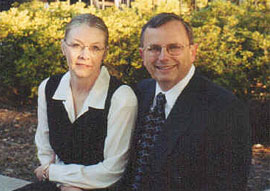
Brad is a Christian and a native of Oklahoma who went to Israel and earned two graduate degrees from the Hebrew University. His doctorate explored the Jewish background of the life and teachings of Jesus. He compared the parables of Jesus in the Gospels to the parables of the rabbis in Jewish literature. Brad has written many books and articles on the Jewish origins of Christianity. His widely read book Jesus the Jewish Theologian (Hendrickson, 1995) opens up the original historical environment and allows readers to hear the message of Jesus afresh.
The rabbinic literature is compared to the teachings of Jesus. His book The Parables: Jewish Tradition and Christian Interpretation (Hendrickson, 1998) explores one-third of Jesus’ teachings in parables. Brad quotes and explains rabbinic parables and how they relate to the Gospel texts. He is a frequent lecturer at interfaith conferences that explore the Jewish roots of the Christian faith. He is a professor of Judaic-Christian studies at the Graduate School of Theology, Oral Roberts University. He is the founder and president of the Gospel Research Foundation (www.gospelresearch.org), which is involved in the Hebrew Heritage Bible Translation and Commentary Project.
Shabbat Shalom*: Could you explain to our Jewish and Christian readers what led you to address the issues of Jesus? What are the reasons behind two of your latest books, Jesus the Jewish Theologian (1995) and The Parables: Jewish Tradition and Christian Interpretation (1998)?
Brad Young: The first is my intense curiosity. The second is my strong faith, which makes me ask questions. My parents were Southern Baptists, and I grew up in a home where we studied the Bible and attended church regularly. I was troubled by Jesus’ teaching in the Sermon on the Mount: “Think not that I have come to destroy the Torah and the Prophets; I have not come to destroy but to fulfill them.” It seemed to me that the way we viewed the challenge of Jesus was to tame his radical demands for discipleship. There were inconsistencies. How can Christians so easily dispense with biblical authority by just saying, “We are not under the law anymore”?
No one I talked to, or the books and Bible commentaries, were the authentic Jesus of history. I felt that even though I read and studied the gospels, I was missing something deeper. I knew that I studied, which gave me satisfactory answers. Then I went to Israel in 1972. This experience changed my life. I asked myself, “What can I learn about Jesus in church?" Churches teach their doctrines and denominational positions.
Because of my curiosity and faith, I wanted to understand Jesus. What did he really want from his followers? Why did he talk so much about the kingdom? Why do Christians seem to emphasize the teachings of the apostle Paul to the neglect of Jesus himself? I wanted to know intimately that this deeper meaning had to be very important. Even though I studied Greek and sought answers from the church and scholarship, I was frustrated. Sadly, it seemed that I could not learn very much about Jesus in the traditional church. I had to travel. Israel is the homeland of Jesus. He is of Jewish heritage. The Hebrew language and culture are crucial foundation pillars for understanding his career.
I became determined to return to Israel for study and research. I had already studied Greek, but I knew that Hebrew was essential for Gospel research. I earned two degrees from the Comparative Religions Department at the Hebrew University in Jerusalem. I was especially privileged to work with outstanding scholars like Robert L. Lindsey, David Flusser, and Shmuel Safrai. My goal was to study primarily with David Flusser. He was an orthodox Jewish scholar who concentrated much energy on interpreting the message of Jesus. I had read everything he had written. When I arrived again in Jerusalem and worked on my master’s degree, I was amazed that he adopted me as his disciple. We developed a special relationship in our academic pursuits. We went everywhere together. I edited his English books and articles. He longed to make sure that I learned as much as he could push me to learn. I co-taught a course with him at Hebrew University.
Often, I would drive him to a lecture or some other appointment. My personal teaching lecture from Professir Flusser would begin on the way to getting into the car and continue throughout the day. Sometimes we would study late during his Sunday evening course until one or two in the morning. After the study, he would walk me to my car, teaching all the way, and on occasion I would roll up the window and drive off while he was still talking. I was a sponge and wanted to learn everything this elder scholar of scholars had to share.
Moreover, the city of Jerusalem is a wonderful place to explore the Jewishness of Jesus. Archaeology is all around you. The Hebrew language is everywhere. Many world-renowned biblical scholars are constantly coming to Jerusalem to study, and so you encounter the best of learning. The Hebrew University is a tremendous source of academic excellence. I loved living in Jerusalem. So here I was, a Baptist boy from Oklahoma living in Jerusalem, studying with an Orthodox Jewish scholar of the New Testament, rabbinism, and the Dead Sea Scrolls. I wrote my doctorate on the parables of Jesus and made comparisons to the rabbinic parables. I began to understand Jesus’ message about the kingdom of heaven because of my study of Talmudic literature. I had to write about what I was discovering.
I hope these books will help others, and based on the responses I have received from readers, I believe that they have assisted many. I receive the most response about the “kingdom suffers violence” chapter in Jesus the Jewish Theologian, in which, accurately understood, Jesus teaches that the kingdom is an active force. Based on early Jewish interpretations of Micah 2:13, the Messiah would be preceded by Elijah the prophet. John the Baptist fulfills the role of Elijah, who is the breaker of Micah 2:13, and Jesus is the king Messiah figure in the verse who is spearheading a powerful kingdom movement that is forcefully advancing, bringing healing and wholeness to a suffering world. The disciples play a decisive role by partnering with God and helping people who are suffering.
Shabbat Shalom: There has never been so much written by Christians about the Jewishness of Jesus as in recent years. How do you explain this phenomenon?
Brad Young: Two historical events and their influence, I believe, have had a significant impact on the trend in Christian theology to explore the Jewishness of the historical Jesus. The first is the Holocaust. The second is the establishment of the State of Israel. The Shoah has forced Christian theologians to recognize the anti-Judaism of our theology and the need to rediscover the roots of our faith in Judaism. While the Nazis were in many ways anti-Christian, Christian theology supported their negative portrayals of the Jewish people.
Sadly, today we are witnessing the resurgence of anti-Semitism, especially in European countries, which seemed to change for the better after the Nazis. Now we are witnessing anti-Semitic violence in France and Germany, as well as in Eastern Europe. The impact of replacement theology, which proclaims that God has rejected his people Israel by breaking his eternal covenant with them and by giving all promises made to Israel over to the church, is strongly felt in church teachings that culminated in persecutions like the Crusades and the Holocaust.
The same theology is used to support the new wave of anti-Judaism and anti-Semitism today. But after the Holocaust, Christian theologians and Bible scholars began to study the Jewish origins of Christianity and to recognize the value of the faith of Jesus as well as their own faith in him. Great progress has been made in many areas. The hearts of many Christians changed when they witnessed the tragic events of the Holocaust.
But the same theological approach to the synagogue that led to the Shoah was still in place. Since the Holocaust, scholars, theologians, and church leaders have been studying the Scriptures and reevaluating the teachings of hatred. Better, more biblically-based teachings are now being accepted by many Christian believers. To answer the question, moreover, the establishment of the State of Israel has played a major role because Christians traveled to the land of the Bible. They experienced Jesus’ family relationships in their native homeland.
The sheer exhilaration of experiencing the land, the people, and the faith in the original setting has had an enormous impact. These historical events paved the way for the interfaith dialogue movement, which fostered understanding through mutual respect, personal involvement with others, and deep relationships based on friendship, religious sensitivity, and historical awareness.
Shabbat Shalom: How would you explain the Christian silence about the Jewishness of Jesus before?
Brad Young: The main reason is anti-Semitism. Christians do not want to acknowledge their roots in ancient Judaism. Ignorance also plays a major role. New Testament scholars are not knowledgeable about Jewish sources. Most study Greek but never devote sufficient time and effort to master Hebrew. For instance, Christian doctrine stresses that Jesus is the second person of the Trinity. This devout belief overshadows the consideration that Jesus was Jewish and grew up observing Torah, praying in the Temple, studying in the synagogue, and keeping the commandments of God as interpreted by his people.
While I believe that overwhelming evidence suggests that Jesus spoke Hebrew, most New Testament scholars argue that Aramaic was his mother tongue. Aramaic was spoken in the East by many groups other than Jews, just as Greek was widely used in the West. I really believe that scholars do not want to acknowledge the language of the Jewish people during the Second Temple Period. They do not want Jesus to be Jewish. If he were to speak Hebrew, he would be too Jewish. Of course, scholars interpret evidence in different ways, and many scholars who are not anti-Semitic believe that Aramaic was his native language. But the antagonism of the church against the synagogue has greatly impacted scholarship and Christian education.
As my Sunday School teacher taught me, “Jesus was a fine Christian who went to church every Sunday.” Nothing in this statement is true. I was taught that “the Jews are the ones who rejected Jesus.” Many Christians believe strongly that “the Jews crucified Jesus.” When I was working on my Ph.D. at Hebrew University, one Christian friend asked, “What can you possibly learn about Jesus from any Jew like David Flusser?” How else can we learn about Jesus? We must probe the best historical sources from his time, which were written by and for Jews. We must learn the way that Jesus conducted his life. He was loyal to his people and devoted himself to Torah. The truth is that if people really want to learn about Jesus in his historical context, they must examine his Jewish roots. We can learn much from Jewish people and their scholarship.
Shabbat Shalom: So far, Jesus has been seen as the main reason for the Jewish-Christian separation. Could a new look at Jesus in the Gospels change this relationship? What would you suggest to help in that direction?
Brad Young: Fresh perspectives on the life and teachings of Jesus could build a bridge of understanding between the Jewish people and the Christian community. In some ways, Judaism and Christianity suffer from a sick codependency, in which each tries to be independent by an exclusive self-definition and yet interdependent in their theological constructs. Most definitely, this codependency is more acute for Christians because our faith tradition emerged from Judaism. The Jewish people are in a better position to live their faith in their community without considering Christianity.
But Jesus will always be a child of Judaism.
The church will have to recognize the Jewishness of Jesus in order to properly understand his message. Both the church and the synagogue preach the kingdom of heaven. Both have a common cause: to see the repair of a broken world engulfed in great human suffering. When Christians study the way Jesus lived as a pious Jew, they choose a path that leads to interfaith awakening. The next step is to acknowledge the people of Jesus who today are faithful to the Jewish way of living.
Some Jewish scholars have made an effort to place Jesus believably within the network of Second Temple Judaism. They desire to reclaim him from the family on their terms. As one Jewish friend explained to me, “Jesus was not a false Messiah. His teachings are true. He is a failed Messiah. There is a difference.”
The famous Jewish historian Joseph Klausner wrote a book in Hebrew for Jewish readers, which was published in about 1920. Klausner astounded his readers when he compared Jesus favorably with the greatest thinkers and religious leaders of the Talmud. He even said that Jesus’ teaching surpassed that of some Talmudic greats. Klausner was sharply criticized by his peers. Nonetheless, the Jewish people are curious about Jesus. Christians, furthermore, really want to know the truth about Jesus’ life and teachings. I think true Christians are frustrated and disappointed with a Christendom that neglects Jesus’ teachings and ignores his Jewish heritage. They know that they are missing something important.
I am convinced that the only way to really understand Jesus is to encounter Judaism during the Second Temple Period. We need to develop a teachable attitude. We need to approach each other with humility. Studying together the great texts of our faith is mutually beneficial.
Shabbat Shalom: Do you think that there are misunderstandings about Jesus on the part of Jews and Christians as well?
Brad Young: Certainly, both Christians and Jews have misunderstood Jesus. As we bravely and objectively study the historical roots of our common faiths in the golden age of Second Temple Period Judaism, I believe that we will achieve a greater appreciation for our interconnectedness. Jesus is the bridge that will draw Jews and Christians together. Christians and Jews need each other and can learn much through responsible interaction. Both Christians and Jews desire a clearer understanding of the commonalities of their faith traditions. Christians have a lot to learn from Jewish scholarship about Jesus and early Judaism.
Shabbat Shalom: When you read the stories about Jesus in the Gospels, how do you assess Jesus’ behavior? How did Jesus depart from traditional Jewish views?
Brad Young: Jesus never departed from traditional Jewish views. He was loyal to the Torah within the multifaceted interpretations and oral commentaries of Jesus’ day. When his disciples ate grain on the Sabbath, he explained that their actions did not violate Jewish religious law. When he healed on the Sabbath, he pointed to Jewish religious law, which teaches that saving life takes precedence over the observance of the Sabbath day.
He asked, “Is it right to save life or to lose it on the Sabbath?”
Jesus kept the Sabbath day rest. His disciples kept the Sabbath. When they walked through the grain fields, some of Jesus’ disciples began to rub the grains of wheat in their fingers and eat to overcome hunger pains. Someone asked why they broke the Sabbath. Jesus’ answer shows that they did not break the Sabbath. I have written about this episode in Jesus the Jewish Theologian and demonstrated that Jesus used the Halakah to show what is permitted on the Sabbath. According to the right interpretations based upon Jewish oral teachings, the disciples did not do anything wrong. Jesus said, “The Sabbath was made for man, not man for the Sabbath.” A rabbi, Simeon ben Menasyah, who lived not long after Jesus, taught: “The Sabbath was given to you; you were not given over to the Sabbath.”
The rabbi teaches the same message! In fact, I believe that Jesus was referring to the order of creation. His listeners understood this hint back to the creation story. Humanity was created on the eve of the Sabbath on the sixth day. After God had created the world with all its pleasures, He created Adam and said, Enter into the paradise prepared for you, and we will enjoy it together during the Sabbath rest. So, very literally, the Sabbath was made for men.
Moreover, Jesus observed Passover with his disciples. He entered fully into the lives of the people. This is affirmed in early Christian teachings, as reflected in the New Testament. The author of the letter to the Hebrews maintains that Jesus was born under the law and was blameless in his observance. This does not mean that other Jewish religious teachers of the day may not have disagreed with Jesus’ interpretation and application of the Torah, in much the same way as the respected community leader Shammai would disagree with the teachings of the eminent Sage, Hillel the Elder.
Judaism encourages diversity of thought and individual expression. It was perfectly acceptable for Jews to express divergent opinions in discussions of the Torah. The fascinating aspect of most of the religious teachings of Jesus is the fact that later Jewish interpretations of halachah almost always agree with Jesus. At least, almost all rabbis today would acknowledge Jesus’ opinion about Sabbath observance. In fact, David Flusser remarked that no well-intentioned Jew of the Second Temple would find anything offensive about Jesus’ teachings. The conflict surrounding Jesus’ life and ministry is more political than theological.
The Jewish people have a high level of tolerance for theological diversity, but the Romans as well as the Sadducean party, especially the priests who cooperated with the imperial rule, viewed anyone with messianic hopes as a danger. The Romans maintained a policy of executing any would-be Jewish Messiah. The Roman governor Pilate ridiculed the Messianic hopes of the Jewish people when he wrote “King of the Jews” on the cross of a crucified religious leader. This is what Rome will do to anyone wishing to be the Messiah or King.
Shabbat Shalom: Do you think that a Jew could benefit from such a reading?
Brad Young: I believe that everyone, whether a Jewish individual, a Christian believer, or even a secular-minded atheist, would greatly benefit from a cultural, historical, and religious overview of Jewish faith and practice as reflected in the Gospels. History students at the Hebrew University in Jerusalem were required to read the Gospels as important sources of Second Temple Period Judaism, just as they were required to read texts from Josephus, Philo, the Dead Sea Scrolls, and rabbinic literature as primary sources.
All historians of religion value serious research on primary-source material. Many scholars date the Gospels before the destruction of the Temple, while others view a redaction following this significant event. Paul’s authentic epistles are the teachings of a self-confessed Pharisee, which were all written some years before 70 C.E. Sound scholarship explores the available evidence.
But the finest scholars employ critical thinking and scientific evaluation. I argue in my books that Christian scholars wrongly ignore rabbinic sources, often claiming that they were written down too late. The same scholars will quote Papias, a Christian bishop from 130 C.E., as a valuable source for gospel study. But the only source we have for Papias is Eusebius’ work, which was written in the fourth century C.E. We only have “late” quotations of Papias in a fourth-century history book. Yet while this source is valued, rabbinic sources based upon a long oral tradition are excluded. The Mishnah is usually dated to 200–225 C.E., but it contains many earlier oral teachings. Certainly Rabbi Meir from an earlier generation had a significant impact on the compilation of the Mishnah in the time of Rabbi Judah the Prince.
The teachings of Hillel the Elder, for instance, represent an earlier period and certainly possess value in gospel research. These Christian scholars should recognize the process of transmitting oral tradition and employ critical evaluation and scientific research methods for the rabbinic literature instead of ignoring this crucial evidence. The best scholars will evaluate all the evidence and not exclude crucial sources. So to answer the question, Jewish scholars will benefit from gospel study. Moreover, Christian scholars will benefit from rabbinic studies.
Shabbat Shalom: So on the one hand, Christians should engage more in the study of rabbinic literature, which would help them understand the Gospels better. On the other hand, then, what can a Christian learn from the Gospels about the Jews?
Brad Young: In my experience, most Christians are so indoctrinated by anti-Semitic preaching and the prejudice of anti-Judaism in scholarship and theology that they learn very little about the Jewish people in their reading of the Gospels. They have accepted negative portrayals of Jews and Judaism in their educational background to the degree that they automatically read into Gospel stories their prejudice. I grew up with this problem. I see it in school literature.
One example might show what I mean. In Luke 13:31, we read that the Pharisees came to Jesus and warned him that Herod wanted to kill him. This is Herod Antipas, who killed John the Baptist. A normal reading of such a statement would tell any open-minded reader that these Pharisees wanted to save Jesus’ life and were providing him with helpful information. My popular study Bible and numerous commentaries teach that the Pharisees, as always, wanted to kill Jesus. They tried to frighten him into another region so that they could trap him and kill him themselves. I argue that there were good and bad Pharisees.
In fact, if we are honest, there are good Christians and bad Christians. The New Testament teaches that Rabban Gamaliel, the leader of the Pharisees, saved the apostles. But we never examined the diversity of the Jewish people during this period. Jesus criticized the hypocritical practices of some Pharisees because he was close to their spiritual world and longed for their faith renewal. His criticism of the Pharisees might well indicate that he himself identified with the Pharisees. But in the English-language dictionaries, the word Pharisee is defined as “Hypocrite.” Every religious movement has its hypocrites. But no religious believer would tolerate being judged by the hypocrites of their movement.
A faith tradition should be evaluated by its teachings, its finest leaders, and its devout followers. In other words, Christian scholars, educators, pastors, and laity should take a few steps back and evaluate preconceived ideas based upon hearsay evidence. As Christians, we should learn about the Pharisees and Jewish thought from their own teachings, recognized leaders, and pious disciples who practice what they profess. The Gospels are a treasure trove of information about the Jewish people, their beliefs, their sacred temple, their holiday commemorations, their study of the Bible in the home and synagogue, as well as life transitions such as a wedding, birth of a child, circumcision, redemption of the firstborn, the meaning of family names, or even personal ideas about God and His dealings with people. Jesus was active in every aspect of Jewish social and community life.
Shabbat Shalom: What advice would you give to Christians to help them better understand the Jewishness of Jesus?
Brad Young: The first piece of advice I would give a Christian wanting to better understand the Jewishness of Jesus is to read the Jewish Prayer Book. To understand a people, we should begin by comprehending their prayers. Of course, I would recommend the books I have written because I believe in what I do.
My work, Jesus the Jewish Theologian, or even The Jewish Background to the Lord’s Prayer, is a great place to begin. My life’s work has concentrated on helping people achieve this type of understanding. I also encourage readers to explore the writings of David Flusser and others who have made contributions in this field of comparative study of Jewish thought with Gospel teachings. I always include a good working bibliography in my books. On the practical side, Christians should explore Israel. A trip to the Holy Land will inspire and educate. Christians should make an effort to interact with the Jewish community. They should participate in Holocaust commemorations. They should visit Holocaust museums.
Everyone needs to experience the US Holocaust Museum in Washington, D.C. There are many other fascinating Jewish museums throughout the US. Christians can participate in Jewish charitable causes, some of which impact Israel. There are funds that help Israeli victims of terror. Why should only Jewish people be involved in charities that help victims of terror? Christians should experience praying the prayers of the Jewish prayer book with a Jewish congregation on Friday night or on Sabbath morning. The Sabbath experience can be very meaningful. They should make the effort to learn about the Jewish holidays. Learning some Hebrew can also be a very meaningful experience. There are many excellent Hebrew study programs for adult learners studying at home. Many of these opportunities are on the web. Shabbat Shalom readers would read the Jerusalem Post, the English newspaper published in Israel.
Shabbat Shalom: You have given some really practical advice. Could you, in a few words, remind us of the characteristics of the teaching and the life of Jesus that clearly reveal his Jewishness?
Brad Young: Jesus possessed a passion for the Torah and was consumed by the message of divine love. This message flows from his interpretation and application of the Torah in daily life, especially in the way he proclaimed God’s reign. Jesus declared, “I have not come to destroy the Torah...' In his interpretation of the Torah, he fulfilled its message by explaining how his disciples could live a life pleasing to God. One early Jewish rabbi taught that any prayer that does not mention the kingdom of heaven is no prayer.
I believe that Jesus of Nazareth would agree—first because he taught his disciples to pray, “Thy kingdom come,” or better translated, “Continue establishing your kingdom,” and second, because Jesus modeled living the actualization of God’s reign. In the Sermon on the Mount, he emphasized prayer, forgiveness, fasting, and almsgiving. In such actions, disciples allow their light to shine before others. The world will see the good works of the disciples, which Jesus stressed more than faith in this teaching from the Sermon on the Mount. In Judaism, action emerges from faith, and a person’s good works are valued more highly than the soundness of his or her theology.
In Christianity, we stress belief over practice. The story has been told about the Hindu leader Ghandi, who paved the way for the independence of India from British rule by applying the teachings of Jesus from the Sermon on the Mount. A reporter asked Ghandi what he admired most about Christianity. He replied, “Jesus.” Then the reporter asked what he admired least about Christianity. He answered, “Christians.”
Shabbat Shalom: Now a controversial question: Do you think that a Jew who takes Jesus’ teaching seriously can still remain a Jew, especially if he or she keeps practicing the Torah?
Brad Young: I hesitate to answer this question because I am not Jewish. The Jewish people have the right to define who is a good Jew. But as a matter of record, one of the most controversial and unresolved questions in the Israeli government to this day is “Who is a Jew?” The Orthodox community gives a different answer than Reform Judaism. To answer your question directly, I would have to observe that there is nothing “unJewish” about taking the teachings of Jesus seriously. An examination of all that we know about Jesus shows that he was indeed a faithful Jewish believer who was loyal to the Torah and his people.
Of course, for us who are Christian believers, he was more than a faithful Jew. As far as I can understand from the gospel portrayal of Jesus, he never taught Jews to disobey God’s commandments but rather encouraged observance. In Matthew’s Gospel, Jesus tells the rich ruler, “If you would enter life, keep the commandments.”
Shabbat Shalom: It has been said that it is not the Messiahship of Jesus that is a real problem from a Jewish perspective and that really separates Jews from Christians, for there were many bold messianic claims in Jewish history that still did not lead to a separation. How do you respond to that?
Brad Young: I agree that the Messiahship of Jesus is one of the problems. It is not the real problem unless we make it so. In fact, we could rephrase this observation. Perhaps the Messiahship of Bar Kochba was the real problem during one significant period of Jewish history. Christian believers of Jewish descent who apparently were still involved in their community could not agree with influential leaders like Rabbi Akiva, who, according to the Jerusalem Talmud, proclaimed Bar Kochba as the Messiah.
Throughout Jewish history, there have been massive messianic movements, and one of the thirteen principles of Jewish faith proclaims, “I believe in total faith in the coming of the Messiah...” There are trends that go up and down in history. In some periods, the messianic idea is prevalent, while in others, it is marginalized. Even today, when the messianic idea is of minimal interest for most Jewish believers, there is a very strong belief in the coming of the Messiah within some groups. In short, I do not believe that the Messiah question is the major problem in Jewish and Christian relationships today. It is probably a greater problem for some Christians.
One Christian friend said to me, “How can I accept someone who rejects my Savior, the Lord Jesus Christ, who means everything to me?” This feeling can be very strong for some believers. However, all Christians acknowledge free will in the sense that faith in Jesus is a choice. Christian faith is a relationship you choose to develop, and one cannot be a committed Christian on the basis of ethnic background. Since free will is involved, no one should be forced to convert, and other people’s views are sacred before God, even though they may disagree with some points of Christian theology, because God gave each individual the right to learn and decide. On the Messiah issue, Jews and Christians can agree to disagree, showing love and integrity for one another.
Most of the time, they can even agree to disagree—agreeably. I think other issues related to a theological worldview are of greater consequence. Some of these issues have already been discussed. In addition, some of the differences are more political than theological. A conservative Christian Republican will disagree with a liberal Jewish Democrat on social issues on which both hold strong opinions. On the religious side, Christians and Jews both believe in the Hebrew Bible. But the Bible really separates them.
After all, Jewish people interpret the Bible from the perspective of oral traditions in Talmud, and Christians interpret it from the position of the New Testament and the Church fathers, who were influenced by Aristotelian philosophy and neo-Platonism. On a personal level, I have found the greatest benefit from textual studies involving both Christian and Jewish participants. Both communities are people of the book. When we study texts of Scripture together, we gain insight into our own traditions as we learn and affirm the traditions of our brothers and sisters.
Shabbat Shalom: May I ask a personal question? How did your reading of the Gospels and your exposure to Jesus, the Jewish theologian, affect your religious thinking? To what extent has this experience made you a better Christian and drawn you closer to Jews?
Brad Young: The driving force of my research and my personal journey to Israel, the historical cradle of Christian faith, has been to understand clearly and objectively the message and the meaning of Jesus’ life and teachings, regardless of denominational or church doctrines. I have tried to detach myself from current Christian dogma and immerse myself in the original environment of Jesus’ life as far as this is possible. Learning Hebrew has been a rich spiritual experience.
No words could express the power of the sublime exaltation one experiences when studying the Psalms in Hebrew. The best translation fails to convey the intense force of the words. The Hebrew roots of Jesus’ message are very strong and open up a dimension of spirituality often missed in modern translation attempts.
Encountering Judaism and developing meaningful relationships with Jewish scholars, as well as personal friendships, have greatly enriched my faith. I believe that I am a better Christian for the effort, though I long to be a much more dedicated disciple of Jesus. But somehow it is clear that the closer I draw to the authentic Jesus of history, the closer I come to my Jewish brothers and sisters of today.
*This interview was conducted by Martin Pröbstle (Sept 30, 2003).