
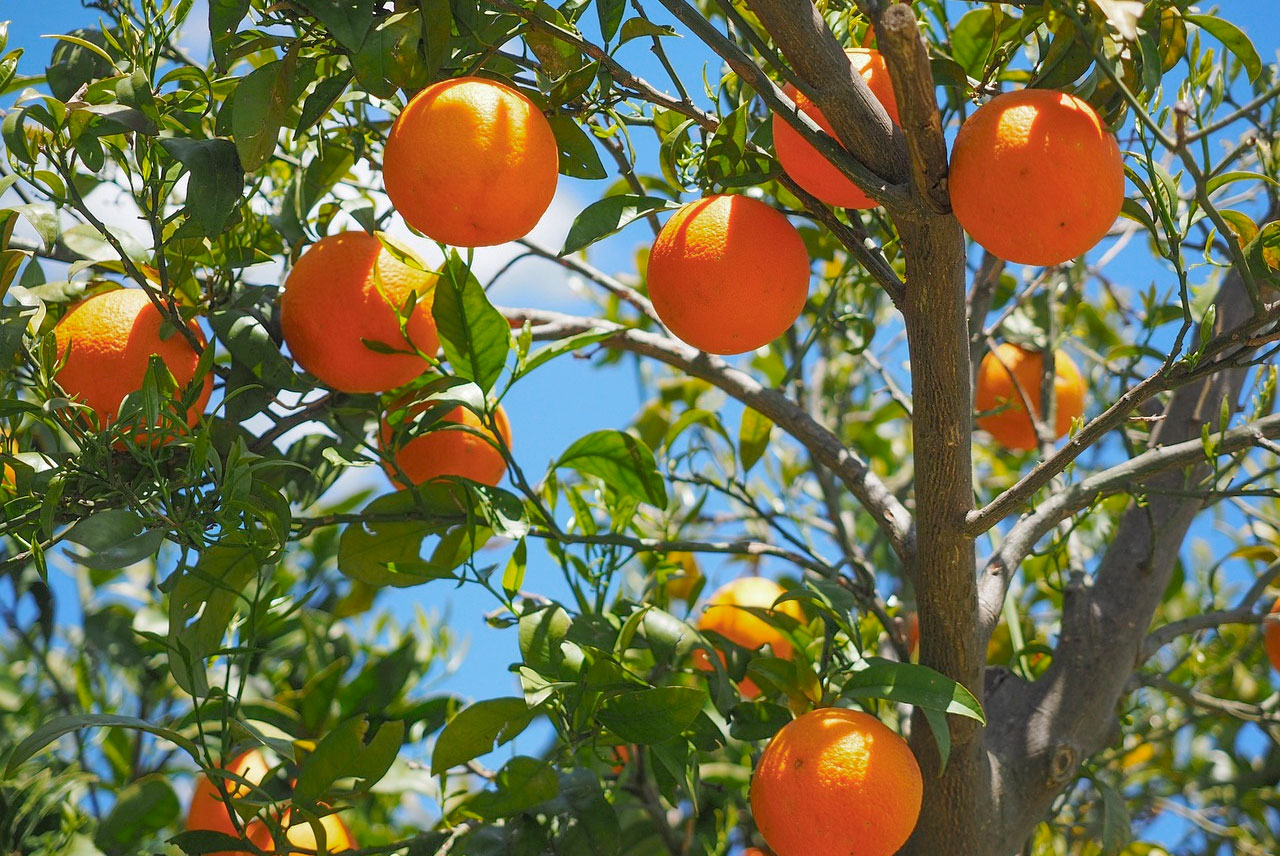
 When God led Adam around the Garden of Eden, God said, ‘Look at My works. See how beautiful they are! How excellent! For your sake, I created them all. See to it that you do not spoil or destroy My world, for if you do, there will be no one to repair it after you.” (Ecclesiastes Rabbah 7:13)
*****
Often considered to be a festival celebrating the blessings and joys of God’s divinely created nature, Tu BiSh'vat, also referred to as Chamishah-Asar BiSh'vat (the “15th of Sh’vat” or the “New Year for Trees”), is a Jewish celebration focused on thankfulness for creation and the solemn responsibility to share the fruits of the earth with all, especially those less fortunate than ourselves.
Generally, Tu BiSh'vat coincides with the beginning of Israel’s springtime and almond blossom season, when pink and white blossoms begin to speckle the barren wintertime landscape. Some may consider it a festival or a minor holiday and spend some extra time reading Leviticus 19:23 and Deuteronomy 20:19–20, among other traditions, whereas others would not consider Tu BiSh'vat to be categorized as a festival but merely an important date for ancient Israeli farmers.
Judaism has tended to look favorably on trees, viewing the Torah as “the Tree of Life” and highlighting the prohibition against destroying fruit trees in a time of war, as noted in Deuteronomy. Trees in the natural world have reverence within many Jewish communities, and Tu BiSh'vat is simply a celebration of this reverence, perhaps considered to be a Jewish Earth Day or Jewish Arbor Day. As one sage described it, “Trees were created for man’s companionship. Another sage describes trees: “If a man kills a tree before its time, it is as though he had murdered a soul.”
Traditionally, Jewish families may choose to plant trees on this particular day, particularly if a couple was married or blessed with the birth of a new child within the past year. Many will plant cedar trees to honor the birth of a new son or cypress trees to commemorate the birth of a new daughter. When these children grow up and get married, the trees planted to honor their birth will be cut down to construct the chuppah.
The post-Biblical origins of Tu BiSh'vat date back to the writings of the Mishnah that appeared in the third century. Meanwhile, multiple Jewish writings and the Cairo Geniza suggest there is evidence that Tu BISh'vat was celebrated during the Middle Ages.
Rosh Hashanah 1:1 and 14a in the Mishnah describe four different new years with various connections to ancient tithing cycles. At one time, the Israelites would be expected to bring a tithe (known as Maaser Sheni, the second tithe, in addition to Kohain, the first tithe) of their annual fruit harvest to the Temple in Jerusalem. This sometimes got a bit complicated with different fruits being harvested at different times throughout the year and the difficulty of making multiple trips to Jerusalem each year to pay one’s tithe. These tithes were used to feed the priests in years one, two, and four of the seven-year agricultural cycle and the poor and otherwise less fortunate in years three and six of the agricultural cycle.
Furthermore, fruit harvested in one year could not be used toward the tithe for another year; it must be tithed in the year it was harvested. Thus, the rabbis decided to impose a date when the agricultural year would end for all crops, and the tithe would be due for the entirety of the last year. The month of Sh’vat was chosen because this is a time when springtime is starting to emerge, when the sap is beginning to run in the trees after a long winter but has not yet produced fruit for the current year.
In the Mediterranean region, the wintertime rains commence around Sukkot and conclude near the time the almond blossoms emerge around Tu BiSh'vat. Thus, as the wintertime rains are coming to a close, the soil is saturated with moisture, ready for the harvest season ahead, and perfect for planting any new trees. Thus, it would be a good time to ensure your previous year’s tithe is paid since those fruits are a byproduct of the previous year’s wintertime rainfall.
Some kabbalists attached additional spiritual significance to Tu BiSh'vat, believing the occasion to be a source of mystical ideas, and had various rituals associated with this day believed to help increase God’s presence in this world. These fruits were also based on the description of fruits listed in Deuteronomy 8:8, which described Israel as a “land of wheat and barley, of vines [grapes], figs, and pomegranates, a land of olive trees, and [date] honey.”
Many seder participants will also drink four cups of wine on Tu BiSh'vat: white wine (symbolizing winter), white with some red (symbolic of winter transitioning to spring), red with some white (symbolic of the early part of springtime), and finally all red (symbolic of spring and summer).
In some places, carob also earned a place on the Tu BiSh'vat seder plate due to its ability to survive travel from Israel to Europe. Others, however, may shun carob for its association with chocolate and will use Tu BiSh'vat as an occasion to educate fellow citizens on not only the environmental aspects of the chocolate industry but also the role of slave labor and child labor in the chocolate industry.
The kabbalists compiled all of their thoughts and philosophies, complete with references to the Bible and various rabbinical texts, and published a Tu BiSh'vat Haggadah titled Pri Etz Hadar (“Fruit of the Goodly Tree”) in 1753.
While kabbalism is where the concept of Tu BiSh'vat seders first originated, the consumption of various fruits was believed to somehow inspire God to be more present in the world. Common fruits and other foods enjoyed during the Tu BiSh'vat seders include those native to Israel—those mentioned in Deuteronomy 8:8—as well as almonds and others that may grow in one’s local area. If one partakes in a Tu BiSh'vat seder, there are specifically 15 types of fruit consumed.
For those who choose to partake in a Tu BiSh'vat seder, if it is the first time within a year or season that one is consuming a particular fruit or fruits, the Shehecheyanu blessing is often said before the standard ha’etz blessing over the fruit. Jewish law prohibits the consumption of fruit that is less than three years old and considers it a matter of spiritual maturity to adhere to this law. Some more modern seders may focus on the seven aforementioned species in Deuteronomy rather than the previously traditional 15 types of fruit and attach symbolism to each seven species.
These seders are becoming less common, however, as many associate the Tu BiSh'vat seders with kabbalistic rituals. Instead of the seders, many will instead donate financially on or around Tu BiSh'vat to the Jewish National Fund’s efforts to reforest Israel. For Jewish people living in climates that are not suitable for planting trees in January or February, some will use Tu BiSh'vat to plant parsley seeds so that their parsley will sprout in time for their Passover seder plate later in the spring. In addition to philanthropy and tree or parsley planting, many will use the occasion of Tu BiSh'vat to promote various environmental causes within the framework of responsible stewardship of God’s earth and creation.
Many view Tu BiSh'vat as festive, and therefore Tachanun (petitions for forgiveness and confession) might be omitted from the liturgy on this day as part of the festive spirit. Fasting is not encouraged, and people still go to work and school, as Tu BiSh'vat is viewed as a minor holiday at best. Schoolchildren might plant trees and sing songs on this day; some congregations may mark the day by singing songs called coplas.
In more modern times, Tu BiSh'vat has received some notoriety due to the Zionist movement, which, in its efforts to connect the Jewish people with their ancient homeland, has taken to planting trees to denote smachot (special occasions) and reforest Israel. The Holy Land used to be fertile and lush in flora and fauna, but various wars and conquests coupled with desertification stripped Israel of its ancient trees.
Because of Tu BiSh'vat celebrations and the Jewish National Fund financially supporting the reforestation and restoration of natural ecology in the Holy Land, Israel is the only nation in the world that can proclaim a net growth of trees, whereas most nations are losing trees due to deforestation and urbanization.
Add comment