
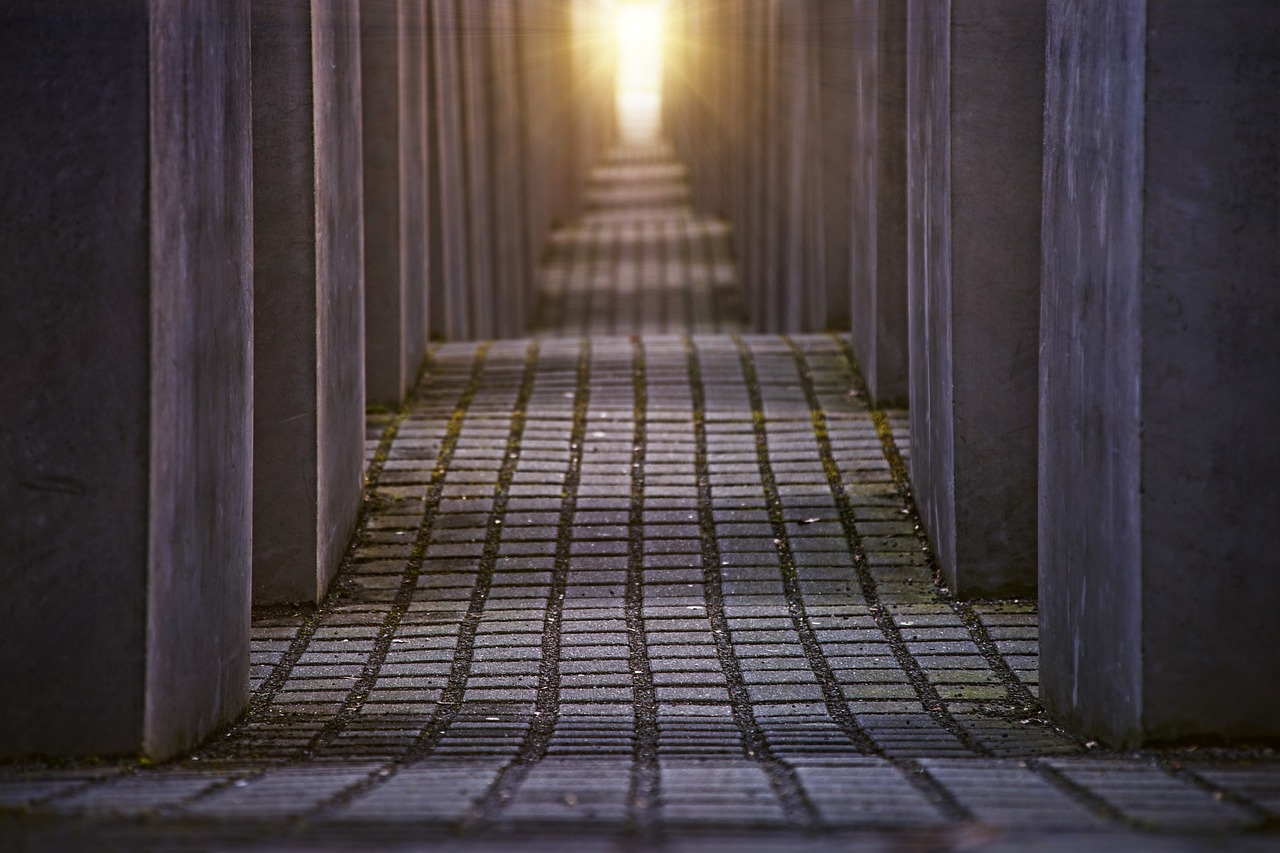
Yom HaShoah Ve-Hagevurah, often shortened to Yom HaShoah as it is observed globally by the Jewish people, or Holocaust Remembrance Day as it is known in English. The solemn occasion often begins with an official state ceremony in Yad Vashem in Jerusalem, which is usually live-streamed on YouTube with translations in English and a few other languages as well. A variety of other events throughout the world will typically honor the occasion.
Translated in full, Yom Hashoah Ve-Hagevurah means Remembrance Day of the Holocaust and Heroism. This commemorative day was first established in Israel in 1951 (three years after modern Israeli statehood was first established) on a date correlating with the Warsaw Ghetto uprising.
Important note: Yom HaShoah is a separate occasion from the United Nations-established International Holocaust Remembrance Day that occurs in late January. In 2005, the United Nations General Assembly, with approval from Israel’s delegation to the United Nations, passed Resolution 60/7 designating January 27 as an honorary date for the world to commemorate the plight of the Jewish people under the Nazi regime, as well as the 1945 Red Army liberation of Auschwitz-Birkenau, one of the Nazis’ most infamous death camps.
In Israel, air raid sirens began blaring on the morning of Yom HaShoah each year, alerting the citizens to drop whatever they were doing—driving, working, walking, enjoying the beach, any activity—and observe two minutes of solemn silence and reflection. Telecommunications companies throughout Israel changed their regularly scheduled programming at this time to feature broadcasting focusing on Holocaust remembrance and education.
As part of the official state ceremony typically conducted at Yad Vashem, six Holocaust survivors who are now Israeli citizens will light six memorial torches in honor of the six million Jewish people who perished during the Holocaust. Though the number of Holocaust survivors not only in Israel but worldwide is dwindling due to the advanced age of survivors, it is believed that 148,763 Holocaust survivors still remain in Israel as of 2023, according to data revealed by the National Insurance Institute (Bituach Leumi). There is usually a wreath-laying ceremony, and candles will be lit in honor of the victims. The Knesset, meanwhile, typically hosts a separate state ceremony reciting the names of Holocaust victims.
In recent ceremonies, Israeli President Isaac Herzog has called on the Israeli people to, for a short time, set aside their differences and grievances regarding Prime Minister Benjamin Netanyahu’s government’s plan to overhaul the Supreme Court's authority regarding judicial appointments and the protests surrounding this initiative and rather come together for a week of national unity and mourning of the Holocaust.
Israel is not the only country marking this solemn occasion, however.
In Poland, the Israel Midwives Association, a professional organization of approximately 1,400 midwives who work in Israeli hospitals and in the homes of women who choose to deliver outside of hospitals, typically sends a delegation of midwives to historical Holocaust-related sites of significance in Poland in honor of Yom HaShoah.
Jewish midwives during the Holocaust risked their lives to deliver babies in the ghettos and concentration camps of the era despite inadequate sanitation, nutrition, and medical supervision, especially should there be any complications with delivery, and none of the traditional supplies available that they would normally use to safely deliver a child.
The March of the Living has been an annual tradition at Auschwitz since 1988, mostly bringing together survivors and their descendants. Several thousand people usually participate in the event each year, and there are traditionally seven torchbearers at the event. Participants will walk approximately two miles from Stammlager I (near the famous “Arbeit Macht Frei” gate) to the gas chambers of Auschwitz-Birkenau. The event is focused on reminding people of the atrocities of this chapter of history, especially in an era of seemingly increasing anti-Semitism, and honoring the Jewish victims of the Holocaust as a whole.
Some world leaders and the European Union have historically issued statements in honor of Yom HaShoah. In the United States, Jewish survivors will often share their testimonies and memories in the Bronx. One year at Yom HaShoah, Secretary of State Antony Blinken released a video sharing the testimony of his stepfather, Samuel Pisar, who was 12 years old when the Nazis invaded his hometown of Blalystok, Poland.
His family tragically perished at the hands of the Nazis, but Pisar was able to physically escape during a winter death march and was assisted by American soldiers in securing safety from there. After obtaining freedom, Pisar went on to obtain his Doctorate in Law degree from Harvard University and the Sorbonne, advise American and French presidents, work as a lawyer in Hollywood, corporate America, UNESCO, and the International Olympic Committee, be nominated for the Nobel Peace Prize, rewrite text for Leonard Bernstein’s Symphony No. 3 (“Kaddish”), and educate the world on the horrors of the Holocaust, lest we forget.
Back in Israel, Prime Minister Benjamin Netanyahu usually also speaks at the Yad Vashem ceremony. As he put it at one year's ceremony, “You chose life. You believed in good. You helped others."
"The height of this victory is the independence of our 75-year-old country. Israel is a vibrant, free, democratic country with so many achievements,” Netanyahu continued. However, there is a “relentless battle against those who seek to kill us,” Netanyahu also said, explicitly referring to potential Iranian nuclear deals.
“Our enemies,” Netanyahu said at this speech at Yad Vashem, “will find us standing shoulder to shoulder together.”
The profound horrors of the Holocaust challenge both Jews and Christians in their faith, whether as persecuted children of God or tangential to the unfolding atrocities grappling with their responsibilities as Christians in helping an oppressed people group.
“It is not possible to love a ‘Spiritual Israel’ and hate the earthly Israel,” Franklin Littell, a Christian historian, wrote. “It is not possible to honor and obey the God of Abraham, Isaac, and Jacob and wish evil to the Jewish people. To lay it on the line, it is not possible to side with those who seek Jerusalem’s destruction and be numbered as faithful Christians. It was not possible in Germany during the Third Reich, and it is not possible today in America.”
“Is it possible for Christians and Jews to still believe in a God who is omniscient and omnipotent after His deafening silence when we needed Him most?” Rabbi Yechiel Eckstein once penned a book regarding the Holocaust. “Can we speak as we did earlier of God’s abundant love and concern for mankind? Can we talk of a good God guiding the course of history while knowing that some events seem to reflect the utter absence of His love and guidance?”
“The primary imperative to be elicited by Christians from the Holocaust is equally as compelling as is that of the Jews—to expunge any and all traces of anti-Semitism and anti-Judaism from their midst." Rabbi Eckstein continued. “They, too, are divinely obligated to ensure Jewish survival and to prevent a future Holocaust.”
Rabbi Eckstein highlighted a verse from the Psalms as he wrote in his book: “Like the psalmist long ago, Jews today collectively declare, ‘I will not die but live, and I will proclaim what the Lord has done’” (Psalm 118:17, NIV).
Add comment