
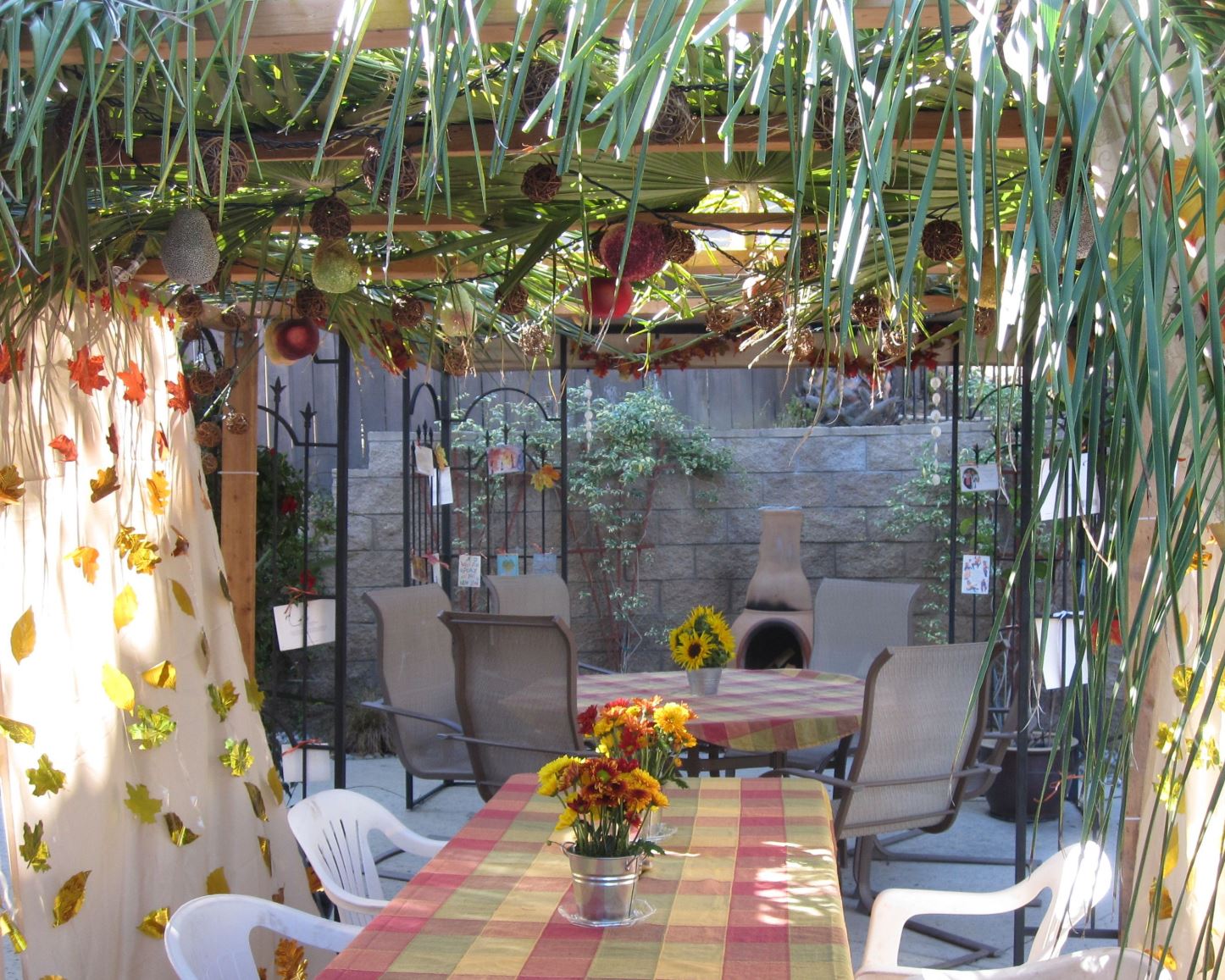
Speak to the people of Israel, saying, On the fifteenth day of this seventh month and for seven days is the Feast of Booths to the Lord" Lev. 23:34.1
Sukkot, or the Feast of Tabernacles, is the last feast of the Hebrew year. According to Lev 23:40 and Deut. 16:14–15, this feast was to be joyful, in contrast to the Day of Atonement, which precedes it (Lev. 23:27).
The Biblical text mandates that the people build booths, or temporary huts, and live in them for seven days. This symbolism reminds us that life is fleeting and temporary, in contrast to an eternal God. This is why the book of Ecclesiastes is often read on the seventh-day Sabbath, which falls sometime during the feast.
The observance of Sukkot has changed a bit over the years, but the Jewish community has tried to stay faithful to the divine commands that dictate Sukkot observance.
The feast lasts eight days, but the first and last are the most important. They are Sabbaths on which no work is to be done. Jewish tradition has also added the second day and often the seventh day of the feast as holidays, while the remaining days are treated in a more secular manner. However, it is important to remember that Sukkot is joyful, and even the holiest days of the feast are treated as a celebration.
Since the end of the Second Temple Period, the Jewish community has been unable to observe the sacrifices. As with the other feasts and holy days, the table and the meals are seen as part of the observance. At the opening meal of Sukkot, blessings are recited, candles are lit, and prayers of thanksgiving are offered.
''And you shall take on the first day the fruit of splendid trees, branches of palm trees, boughs of leafy trees, and willows of the brook, and you shall rejoice before the Lord your God for seven days." Lev. 23:40.
The interpretation of this passage varies. Some believe that these items are to be used in the building of the booth, while others suggest that their function is different. The "four species,' as they are called, are the citron (etrog) and palm, myrtle, and willow branches (lulav). These four items are held together and shaken towards the north, the south, the east, and the west, as well as up and down. As Psalms 113–118 are recited, we remember the cosmic message of the feast.
- All texts are taken from the ESV.
Add comment