
The Siddur liturgy succinctly summarizes the treasured place of the Sabbath in Jewish tradition with these words: “Last in creation, first in intention.” Shabbat is the crown of creation and the first thing made holy by the Creator. "Then God blessed the seventh day and sanctified it" (Genesis 2:3). The six days of creation are "good," but only the seventh day is "hallowed."
With the Sabbath, time itself becomes sanctified, and the resulting redemptive rhythm pervades and punctuates the whole of Jewish life.
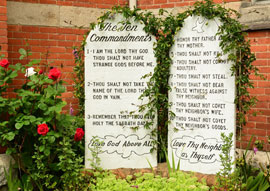
The Sabbath principle is implicit in creation but is made an explicit precept commanded by Israel in the Sinaitic Covenant. Both aspects, creation and redemption, are alluded to in the Ten Words: "Remember" (zachor) the Sabbath in view of the creation (Exodus 20:8). "Observe'' (shamor) the Sabbath in light of the Exodus (Deuteronomy 5:12). In either case, the seventh day is to be sanctified by the Lord.
Whether we operate under the Mosaic covenant enjoined at Sinai or the New Covenant in Yeshua's blood effected at Calvary, Shabbat teaches us much about the Lord of the Sabbath, His intent in creation, and our place in His world. Apart from the legal precept obligatory upon Israel, the Sabbath is a creation principle relevant to everyone who calls on the name of the Lord.
Consider the wisdom and power of the Sabbath to expand our perspective and enhance our relationship with the Holy One of Israel.
- The Sabbath is a testimony to the wonders of creation and the greatness of the Creator. The world as created by God is wondrous and good. The Sabbath reminds us of this. Nature is not to be worshipped, but it should be celebrated as God's handiwork. Consecrating the Sabbath confirms the biblical account of creation and acknowledges the ethical implications of it. The world is the intentional act of Adonai Elohim, to whom we are responsible and before whom we shall all give a reckoning one day. The moral mandates of ethical monotheism, central both to Judaism and to Christianity, hang on the essential truth of the Genesis account of creation, concluding with the Sabbath.
- The Sabbath is the telos or end of creation in two senses, both as its "finish" and as its "goal." In six days, God created the heavens and the earth. On the seventh day, the good became hallowed. The Sabbath completed and culminated God's work of creation and pointed to its goal.
In the Bible, the world is good but not intrinsically holy. Only God, in partnership with man made in his image, can sanctify it. The Sabbath, by God's act and by man's acknowledgment, hallows the creation. Sanctifying the seventh day fashions the world of man into a habitation suitable for the Divine dwelling.
On Shabbat, man and his Maker dwell in yachad, unity, in a special way. Mutually, they create a Shabbat kodesh, a Sabbath of holiness. This union of intimate covenantal partnerships is the goal and passion of the Holy One who created man. Every Sabbath kept, every seventh day hallowed, points to the eventual destiny of the creation itself. The finite world shall become the dwelling of the infinite God, the abode of His glory. And on that day, the whole earth will experience Shabbat shalom.
- To sanctify the Sabbath is to set the day apart from all that is common, ordinary, or profane. It is not that "earthly" things are evil. God created the earth and deemed it tov ("good"). That is why we give him thanks for the good things of the earth, like bread and wine. But in the midst of our labors on earth, we are to create a sanctuary in time for the things of the Spirit. We are to set aside every seventh day unto the Lord and to the things of the Lord. The root Hebrew word for "holy," kadash, means to mark off, set apart, or make distinct. Holiness is intrinsic only to God. He is "kadosh, kadosh, kadosh" (Isaiah 6:3) by his very nature. All else becomes holy only when set apart for him and his service. His holiness can manifest in space, time, and people. To "hallow" the Sabbath, therefore, is to set the day apart from all common or ordinary activities, good though they may be, and to consecrate the day, oneself, and one's home unto the Maker of heaven and earth.
- When we sanctify the Sabbath, we in turn are set apart as God's "peculiar people" and "treasured possession." The Sabbath concept is not a natural occurrence. It is a supranatural opportunity set by God. The seven-day cycle is not self-evident in the natural order of things. Neither the monthly lunar cycle (29+ days) nor the annual solar cycle (365+ days) is divisible by seven. The seven-day week we take for granted was unknown in the ancient pagan world.
The Sabbath represents sacred time, set in place by the act of the Holy One. It became the principal and powerful symbol of Yahweh's unique covenantal relationship with His elected people, Israel. "Speak to the sons of Israel, saying, 'You shall surely observe My sabbaths; for this is a sign between Me and you throughout your generations, that you may know that I am the Lord who sanctifies you. Therefore, you are to observe the Sabbath, for it is holy to you. For six days work may be done, but on the seventh day there is a sabbath of complete rest, holy to the Lord." … When he had finished speaking with him upon Mount Sinai, he gave Moses the two tablets of the testimony, tablets of stone, written by the finger of God. (Exodus 31:13–18, NASB)
The Sabbath is a "sign'' or symbol that bears visible witness to the enduring covenantal partnership between God and His people. It is holy by God's decree, and it "sanctifies" or hallows those who honor it. Like a wedding band symbolically sets apart a bride as holy and covenanted to her husband, so the Sabbath signifies that Israel is set apart exclusively unto the Lord as his "treasured people'' (am segullah). It distinguishes them from all the other nations as the people with whom God has chosen to make His dwelling.
- In remembering the Sabbath, we honor the Creator by giving up our creations. For six days, we labor in the world for our own ends. We create, control, and subdue the world around us. For one day, we are asked to remember the Creator and return our creations and ourselves back to his dominion. Shabbat reminds the Pharaoh in us that "the earth is the Lord's" (Exodus 9:29). It is only on loan to us. We show deference to our Creator by ceasing our creations on the seventh day. In doing so, we imitate and thereby honor him.
Shabbat reminds us that we, too, belong to him. We must put ourselves and the work of our hands on the altar of God. The Creator enjoins us to exercise dominion and stewardship of the earth, but that can be done properly only by regularly submitting to the dominion of another. In the Sabbath, we acknowledge the Creator as King, and we set apart the day unto him and his sovereignty. Only under his rule do we experience the fullness of peace. In Shabbat, we find shalom.
- To refrain from "work" is one thing; to enter God's "rest" is another. On Shabbat, we are to cease our labor. But we also are to imitate our Creator and enter his rest. Just taking a day off from work is not sanctifying the Sabbath, nor does it satisfy the soul. For that to occur, we must enter the Sabbath rest.
"On the seventh day, God completed His work which He had done, and He rested on the seventh day" (Genesis 2:2). What work did he complete on the seventh day? Ask the rabbis. He created menuach. Rest! Menuach
Shabbat is not a self-indulgent vacation so much as it is a spiritual invocation. We invite God, by his Spirit, to lead us beside the" waters of rest" (menuhot) (Psalm 23:2) and restore our souls. We build a sanctuary in time, and the Holy Spirit comes and fills it with the shalom of God. In this sacred time, we find harmony between man and nature and between one another. We “come unto him,” and he gives us rest.
- To hallow the Sabbath is to sanctify God's name.
"The seventh day is a sabbath to the Lord your God" (Exodus 20:10). Shabbat is made for man, but unto the Lord. The spiritual discipline of Sabbath observance brings peace into our homes and holiness into our world. It blesses man, and it honors God. By our conduct, treating this day as holy, we sanctify God's name.
Shabbat counters our natural tendencies toward idolatry and self-centeredness. It reminds us that our lives are to be thoroughly and intensely God-centered, worshipping him alone. Remembering the Sabbath redeems time and turns our hearts back to those things that pertain to the Father and his priorities. It is a holy day set apart for family and friends, study and prayer, Scripture, and nature. Psalm 19 is read as part of the Sabbath morning liturgy in the Siddur. This inspired Scripture, attributed to David, has two movements. The first, verses 1–6, praises God for the wonders of the world. "The heavens are telling of the glory of God, and their expanse is declaring the work of His hands" (19:1, NASB). The second, verses 7–14, esteems God for the beauty of his word. "The law of the Lord [torat Adonai] is perfect, restoring the soul; the testimony of the Lord [eidut Adonai] is sure, making wise the simple. The precepts of the Lord [pikudei Adonai] are right, rejoicing the heart; the commandment of the Lord [mitzvat Adonai] is pure, enlightening the eyes' (19:7–8).
On Shabbat, we commune with God in both ways—celebrating his creation and considering his revelation. In all ways, we desire to honor, esteem, and exalt him. His name is holy, and we choose to honor it by honoring this day that he has made. He is the Lord God, the Maker of heaven and earth. So, we sanctify the Sabbath and are, in turn, sanctified by him for doing so. May his name be praised, and may his peace cover all the earth.
Several of the ideas expressed in this article are drawn from the late Rabbi Pinch as Peli and his "Shabbat Shalom" weekly Torah commentary that appeared for many years in the Jerusalem Post. © Dwight A. Pryor, All Rights Reserved. Reprinted by permission from Restore! 6, no. 2 (Spring 2000): 18-20.
Add comment