Shavuot

Last in Creation, First in Intention

Expired

Written by: Dwight A. Pryor, Director, Center for Judaic-Christian Studies, Dayton, Ohio
Hits: 2839

The Siddur liturgy succinctly summarizes the treasured place of the Sabbath in Jewish tradition with these words: “Last in creation, first in intention.” Shabbat is the crown of creation and the first thing made holy by the Creator. "Then God blessed the seventh day and sanctified it" (Genesis 2:3). The six days of creation are "good," but only the seventh day is "hallowed."


Shavuot in the Book of Acts

Expired

Written by: Jacques B. Doukhan, D.H.L, Th.D.
Hits: 3031

The book of Acts reports the fulfillment of a universal covenant when the message of the God of Israel reached out to the Gentiles: "devout men from every nation under heaven'' (Acts 2:5), and even identifies some of them: Parthians and Medes and Elamites, those dwelling in Mesopotamia, Judea and Cappadocia, Pontus and Asia, Phrygia and Pamphylia, Egypt and the parts of Libya adjoining Cyrene, visitors from Rome, both Jews and proselytes, Cretans and Arabs—we hear them speaking in our own tongues the wonderful works of God. (Acts 2:9-11)

Shavuot and the Early Christians

Expired

Written by: Robert M. Johnston, Ph.D.
Hits: 2783

In the liturgical Christian churches that observe the traditional church year, there is a festival called Pentecost. It is also called Whitsunday because it was customary for newly baptized people to wear white robes on that Sunday. Churches were decorated with green branches and trees. It is regarded as the birthday of the Christian church and the festival of the Holy Spirit. This day has a fascinating backstory that is rooted deep in the Tanakh and Jewish traditions.

Doing Shavuot

Expired

Written by: Tiago Arrais, M.A.
Hits: 3086

"Then celebrate the Feast of Weeks to the Lord, your God." (Deuteronomy 16:10)

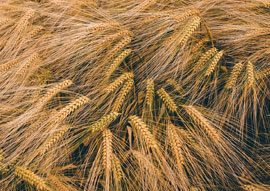
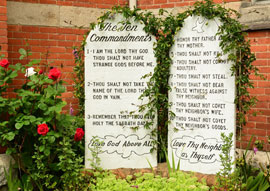
Scripture gives the festival of Shavuot three distinct names in relation to its agricultural setting: "Feast of Harvest,' "Feast of Weeks,' and' Feast of First Fruits. Though the festival is celebrated in this agricultural setting, the greater significance of Shavuot is as a celebration of God's gift of the Torah to the Israelites. He made his revelation for the following generations as real as the harvest around them.