
As I write this article, the High Holy Days of Judaism have come. It is the beginning of the month of Elul, the month of preparation for the coming day of Yom Kippur (the Day of Atonement), and my Jewish friends have invited me to celebrate this time with them. Thus, we meet each day to pray the prayer of teshuva for ourselves, for our loved ones, and for the congregation as a whole.
This process of teshuva is one of returning to God. It involves a sincere turning away from the sins of the past year and a serious consideration of the reasons that stood behind those sins, so that we will take care not to repeat our former mistakes.
It is a time to say, “I am sorry,” and a time to say, “I forgive you.” It is a time of preparation for the judgment that comes on Yom Kippur, when the house of God will be cleansed of the sins that have accumulated there throughout the year. And it is on Yom Kippur that God will vindicate and betroth Himself to His people. God says through the prophet: “I have swept away your offenses like a cloud, your sins like the morning mist. Return to me, for I have redeemed you” (Isa. 44:22).
As I learn about these ancient holidays—the month of Elul (the month of preparation preceding Yom Kippur), Rosh Hashana, Yom Kippur, and Sukkot—I am struck by how much I already know about them as a Seventh-day Adventist. As a denomination, we do not celebrate these holidays in actuality, but we have based our understanding of Scripture on the lessons that they teach. As I act out these Jewish practices in light of my understanding of what they signify on a wider scale, I am coming to an even deeper appreciation of what I have learned as a Seventh-day Adventist.
One of the hallmarks of Seventh-day Adventism is the longing for the second coming of Yeshua to this earth. As early Adventists searched the Scriptures in preparation for this event, they came to understand that a day of judgment would precede the Messiah’s return. They also came to see the ancient Jewish holidays as symbols of the Messiah’s acts on our behalf. For instance, the Messiah died during the celebration of the Passover. He became the Lamb whose blood was applied for our salvation. The Holy Spirit, the Comforter whom Yeshua had promised would come in His place after His death and resurrection, descended on those who waited anxiously in the upper room on the Day of Pentecost. Then comes the preparation time preceding the final Great Day of Atonement, the final Yom Kippur. Finally, there will come the Feast of Tabernacles, the time for celebrating the people’s entry into God’s kingdom, the Promised Land.
As they searched the ancient Jewish prophecies, Adventists came to understand that now is the time of preparation and judgment. Some, however, in reaction to a misunderstanding of the purpose of divine judgment, have become almost ascetic in an attempt to have no spot of sin in their lives and appear, at times, to place human effort above divine help, thus making the great day of judgment an event to be feared and put off for as long as possible. Others have come to believe that perhaps the Messiah may not come after all and that perhaps He has forgotten us.
But what if we were to consider judgment and the Second Coming from the viewpoint of Judaism? When the ancient rabbis spoke of the coming Day of Atonement, they counseled that it was to be considered a time of solemn joy. In fact, the evening before Yom Kippur was to be looked forward to and celebrated because, when the new day came, God would step forward in judgment to deliver His people.
The month of preparation, or Elul, that comes before Yom Kippur is a symbol of the Hebrew phrase, “I am my beloved’s, and my beloved is mine” (Song 6:3). Just as the woman of Solomon’s Song searched for her beloved and longed for him, so the people of God search for their beloved redeemer and long for His coming. With joyful and, at times, anxious anticipation, they prepare themselves because when the day of judgment comes, they want to be ready, for it is on this day that God will verify the identity of the ones who have been promised to Him and will enact the sacred betrothal of Himself to His people. The marriage will occur when He returns and takes His beloved with him to the Promised Land. And so His plea is, “Return to Me, so that I may return to you.”
Early Adventists answered the call of their beloved. With joyful hearts, they proclaimed the “everlasting gospel” to a listening world: “Fear God, and give glory to him; for the hour of his judgment is come; and worship him that made heaven, and earth, and the sea, and the fountains of water” (Rev. 14:7). With great anticipation, they searched their hearts to receive the one whom they had chosen and who had chosen them.
The passage of time has removed the blunt sting of disappointment that came when Yeshua did not return as expected. But how hard it must have been to face the world again, to prepare for the soon-coming winter, to hope and believe. And yet, there were some who refused to give up.
Through their continued and diligent study, the Adventist pioneers learned that they had not been totally wrong in their understandings. It was true that the time of judgment had come and the fulfillment of Yom Kippur was being carried out. And now is the time of preparation, the antitypical month of Elul. We are to search our hearts and prepare ourselves for our beloved’s coming. For just as in the marriage ceremony where the officiating officer or minister asks concerning the bridal pair, “If there is any lawful reason why this couple may not enter into marriage, come forward or forever hold your peace,” so the question is asked concerning the marriage between God and His people (Zech. 3).
Teshuva, “Return to Me, so that I may return to you.” What a difference this concept makes in our understanding of the judgment of Yom Kippur and the Messiah’s second coming! Judgment becomes an opportunity for the vindication of God’s people, a time when we, the people of God, find acceptance and identification as the beloved of the Messiah, who gave Himself for us. With solemn joy, we lay aside the old ways and prepare to live in the presence of our beloved.
Seventh-day Adventists and Jews live in anticipation of God’s judgment, which will come not only during the period preceding the Day of Atonement but every day. When Friday comes, we are reminded of the month of Elul as we prepare for the Sabbath. The Sabbath becomes the Queen of Days because it is on this day that God draws especially near to His people. And we are reminded as these periods of preparation come and go that the process of teshuva, of returning, is an ongoing procedure because we are a people born into sin and thus have a tendency to turn again to a life of sin. But Teshuva also holds a promise that one day the union between God and His people will be complete, and on that day God will forever destroy the sin that separates us from Him. Therefore, God, our beloved, calls us to return to Him so that He may return to us.
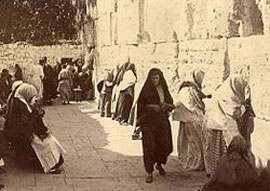
Image: Jewish women praying by the Western Wall, early 1900s. Public Domain
Add comment