
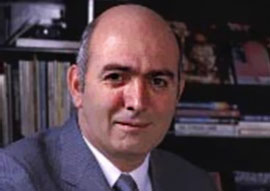
Dr. Samuele Bacchiocchi is Professor Emeritus of Theology and Church History at Andrews University. Dr. Bacchiocchi received his doctorate in 1974 from the Pontifical Gregorian University in Rome. His dissertation focused on the church’s change from Sabbath to Sunday.
An avid writer and lecturer, Dr. Bacchiocchi travels extensively. His works include The Advent Hope for Human Hopelessness: A Theological Study of the Meaning of the Second Advent for Today (1986); God’s Festivals in Scripture and History, 2 vols. (1995); and The Christian and Rock Music: A Study on Biblical Principles of Music (ed., 2000).
Shabbat Shalom: Are Jewish festivals still relevant in today’s modern life? Why?
Bacchiocchi: Yes, the ancient feasts of Israel are still relevant for us today. Many wrongly assume that the annual feasts came to an end with the sacrifice of the Messiah simply because they were connected with the sacrificial system of the Temple. But the continuity or discontinuity of the feasts is determined not by their connection with the sacrificial system but by what they symbolize. If the feasts represent only the redemptive accomplishments of the sacrifice of the Messiah, then obviously their function would have terminated at the crucifixion. But if they also symbolize the consummation of redemption to be accomplished by the Messiah at His second coming, then their function continues in the Christian community, although with a new meaning and manner of observance.
Shabbat Shalom: What was the most important festival in the Jewish yearly cycle?
Bacchiocchi: Passover was and is the most important Jewish festival because it celebrates the liberation of the Jews from Egyptian domination and oppression, which resulted in their national and religious independence. To this day, Jews celebrate Passover as the Feast of Redemption. Even the Sabbath is a reminder that “you were a servant in the land of Egypt, and the Lord your God brought you out thence with a mighty hand and an outstretched arm” (Deut. 5:15). In a sense, the Sabbath celebrates on a smaller scale the Feast of Redemption, which is celebrated at Passover on a larger scale.
The significance of Passover is reflected in the fact that all other feasts are dated with reference to it: “the beginning of months; it shall be the first month of the year to you” (Exod. 12:2). Prior to the Egyptian deliverance, the new year began in the autumn. This is why the Feast of Ingathering is said to occur “at the year’s end” (Exod. 34:22), although according to the religious calendar it fell on the fifteenth day of the seventh month (Lev. 23:34). Thus, the Exodus deliverance caused the beginning of the new year to coincide with the month of Passover.
Shabbat Shalom: Is there a hierarchy among the festivals? Are some more important than others? What is the most important festival for today?
Bacchiocchi: Passover, Pentecost, and the Feast of Tabernacles were the three pilgrimage feasts in ancient Israel. Each can help us to appreciate the unfolding of redemptive history. The biblical festivals can enrich personal and church worship by focusing, during the course of the year, on the redemptive accomplishments of the Messiah’s first and second comings. We cannot preach the whole Bible in one sermon. We cannot celebrate the whole story of redemption on one Sabbath.
Shabbat Shalom: What do you think about Christians observing Jewish festivals?
Bacchiocchi: A church calendar patterned after the calendar of Israel can help us do justice to all the important salvific acts of God. Many pastors go for years without taking their congregation through the central truths of the Christian history of redemption. A church calendar patterned after Israel’s calendar challenges pastors and members to explore more fully these fundamental truths of the plan of salvation, which are reflected in the yearly cycle of festivals.
Following the yearly festal cycle can also serve as a deterrent against the temptation of using the Sabbath religious services to promote various kinds of secular agendas. A church calendar that focuses on the great truths of salvation challenges us to foster worship renewal by seeking a deeper understanding and experience of what the Messiah has done, is doing, and will do for us. The celebration of the great saving acts of God commemorated by the annual feasts can bring about worship renewal by making our worship experience God-centered rather than self-centered.
Shabbat Shalom: What is the difference between Jewish festivals (in terms of psychology and theology) and Christian festivals, in your opinion?
Bacchiocchi: The difference between the Jewish and Christian celebrations of the festivals is to be found in the historical and typological meanings attributed to them. For example, the Jewish Passover celebrates the deliverance from Egypt and the future deliverance of the Messiah to come.
The Christian Passover, on the other hand, points to the past suffering and atoning death of Yeshua for all believing sinners (1 Cor. 11:26). Through the emblems of bread and wine, Christians remember and commemorate the death of the Messiah and his suffering on our behalf: “Do this in remembrance of me” (Luke 22:19; cf. 1 Cor. 11:24). We remember the Messiah as the Paschal Lamb who was sacrificed for us by partaking of the emblems of His broken body and shed blood.
The Christian Passover points to the present benefits of the sacrifice of the Messiah, which are mediated to us in the present. The bread and wine enable us to internalize and appropriate the reality and meaning of this sacrifice. At the Lord’s table, we enter into fellowship with our exalted Lord. Paul describes this fellowship as “a participation in the blood... [and] body of Christ” (1 Cor. 10:16). Thus, the Christian Passover reaffirms the eternal covenant that God promised to the fathers (Jer. 32:40; 50:5; cf. Isa. 55:3; Ezek. 16:60).
Shabbat Shalom: In biblical times, festivals were associated with sacrifices. How does the rest of Scripture (outside of the Torah) justify the maintenance of Jewish festivals?
Bacchiocchi: The continuity or discontinuity of the feasts is determined not by their connection with the sacrificial system but by the scope of their typology, which reaches beyond the sacrifice of the Messiah to the consummation of redemption. For example, the antitypical fulfillment of Pentecost is of fundamental importance to the origin and mission of the Christian church. The first Christian Pentecost is linked to the Old Testament feast chronologically and typologically because it occurred on the very day of the Jewish feast (“when the day of Pentecost was fully come,” Acts 2:1 KJV) as the spiritual harvest of the first fruits of the Messiah’s redemption. As with the preceding feasts, Pentecost has several fulfillments.
First, Pentecost celebrates the crowning of the Messiah’s paschal sacrifice in heaven, which was manifested on earth with the outpouring of the Holy Spirit (Acts 2:32–33)—the first fruit of the spiritual harvest (Rom 8:23; Jas. 1:18), procured by his redemptive mission. As during the original Pentecost at Sinai, there was fire, an earthquake, and a blast of wind that occurred during the first Christian Pentecost (Acts 2:1–3). As God gave His Ten Commandments at Sinai, He now gave the enabling power of His Spirit to the church.
Second, in relation to the community, Pentecost marks the founding of the Christian community and mission. It represents the initial fulfillment of the prophetic vision of the ingathering of God’s people from all the nations to the uplifted temple in Zion and the going forth of the law to teach all nations (Isa. 2:2–3; Mic. 4:1-2; cf. John 2:19; 12:32). The missionary outreach of the Christian witnesses, which unites people of different languages and cultures as one body in the Messiah, represents the reversal of the scattering and hostility of the nations that followed God’s judgment at Babel (Gen. 11:1–9).
Finally, in relation to the end time, Pentecost typifies the continuation of the mission of the Holy Spirit until the completion of the gospel proclamation (Matt. 24:14).
Shabbat Shalom: What are your personal experiences and the lessons you have learned from festivals?
Bacchiocchi: The festivals have helped me to appreciate more fully the unfolding of the plan of salvation—from the symbolic accomplishments of the first coming to the consummation of redemption in the second coming.
In summing up the typology of the spring feasts, we can say that they reveal both a theological and an existential progression. Theologically, Passover can be characterized as redemption, the Feast of Unleavened Bread as regeneration, and Pentecost as empowering.
Existentially, Passover invites us to accept the forgiveness provided to us by God through the Paschal Lamb (1 Cor. 5:7); the Feast of Unleavened Bread summons us to experience the cleansing from sin resulting from God’s forgiveness; and Pentecost calls us to become receptive to the work of the Holy Spirit.
The progression is evident. The forgiveness typified by Passover makes it possible for us to experience the cleansing represented by the Feast of Unleavened Bread. These in turn enable us to become receptive and responsive to the work of the Holy Spirit, as typified by Pentecost.
Add comment